My first night at the Beach Hut through the fury of the wind and rain beating on the cabin, I could hear geese calling to each other. The next morning, in the blue pre-dawn light, I could see the creek edges were alive with geese, ducks and the occasional swan. I made a cup of tea and wondered if they were just there that night because of the storm. As the sun rose they started to disappear and by the time I went out mid-morning, there were no geese to be seen. Was the creek a safe haven for a stormy night, or would they come back that evening? I had my answer later in the day, as the sun disappeared behind the hills I could hear their calls again.
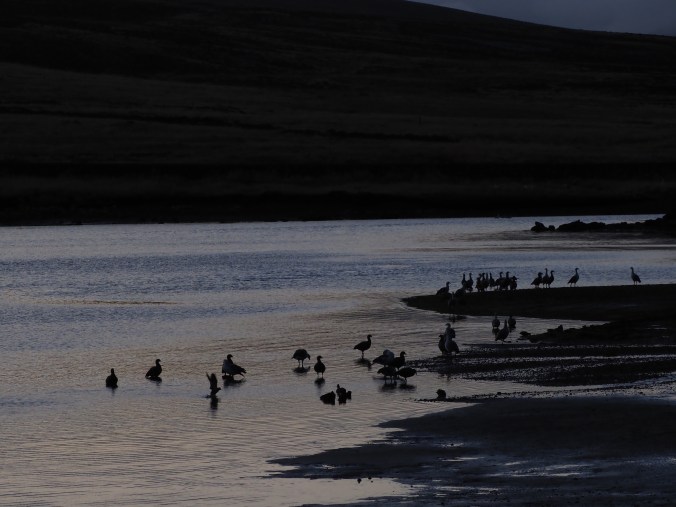
The next morning I bundled up against the pre-dawn cold and went outside to watch the asnerine rituals more closely. In the twilight the geese took to the water, after spending the night on the creek edge. I realised watching them that they were in family groups, sometimes quite large, I counted one with 11 individuals. I knew that Upland Geese adults pair for life but hadn’t really thought about how look each year’s brood would stay with them. Watching these groups, clearly the young adults stay for a considerable time – perhaps until next year’s breeding season.

Each family seemed to follow a similar pattern, take to the water, swim up the creek away from the sea. There was a little bit of feeding and constant, low, quiet sounds to check in with the rest of the family. Then higher up the creek they’d leave the water and might do some wing stretching or just wait. They might get back in the water again, swim a bit further and then out, or not.

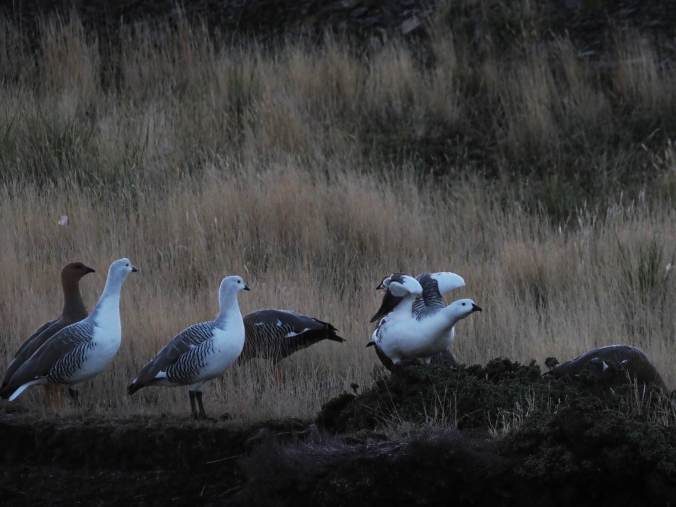

And then for no apparent reason, there would be loud urgent honking from the leader, repeated by all the geese in the group and they would take off at pace, leave the river and disappear towards the grasslands for the day.

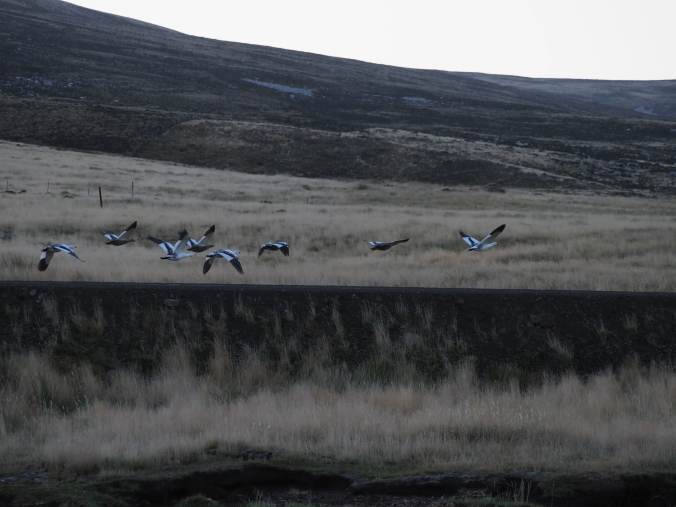
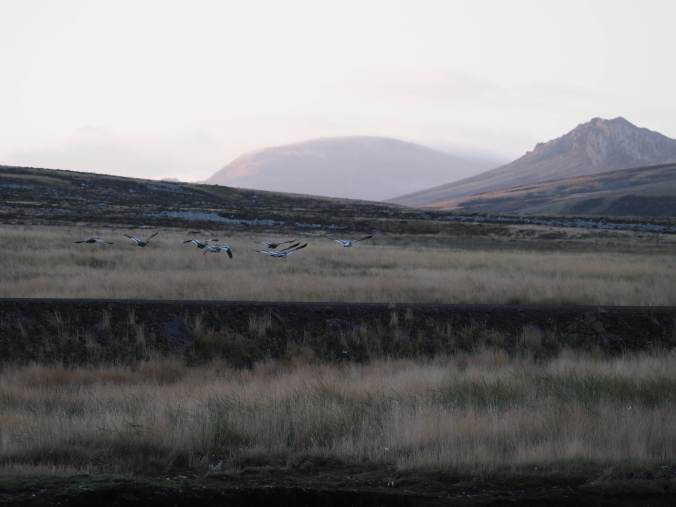
By the time the sun was properly up, they were all gone, to come back in the evening for the whole cycle to repeat.
 Where is Sarah?