The coming of autumn in England is easy to see and experience – summer flowers fade; trees burst into flame, covered in reds and oranges and the days shorten.
Last year, experiencing my first autumn in the Falklands I found it difficult to feel autumnal, because I was missing those visual clues. The few trees we have are evergreen pines, so no colour changes there. The landscape doesn’t change colour dramatically, it’s consistently green, brown, sandy, blue and grey. Our days are shortening, but we don’t change our clocks, so there is no autumnal leap into late afternoon darkness to really mark the change. I felt a bit adrift, attuned to a set of seasonal clues that are irrelevant in the Falklands.
A year on, it all seems more natural and clearly the season has changed to autumn/winter. How do I know? The first change is that the cruise ship season finished at the end of March. No more opening my curtains to see which ship is anchored in the entrance to the Narrows, no more popping out at lunchtime and having to navigate a sea of people who have forgotten normal rules of road and pavement usage. Although tourism is a vital economic sector for the Falklands you can feel the collective sigh of relief that the summer season is over and a season of peace and quiet has arrived.
Another clear sign is the change in wildlife. Rockhopper and Magellanic penguins have finished moulting and left for the winter, we’ll next see them in the spring when they come back to breed again. The Elephant Seals are off to different seas and beaches and the Albatross chicks are fledging and will be gone soon. Although there are still King Penguin chicks and some adults onshore, it’s harder to go and see them. The track to the major colony at Volunteer Point closed at the end of March and won’t reopen until the spring. Track is a strong word for the off road driving experience to VP. It is a track, in the sense that repeated driving across the land has created a track but in the depths of winter with wetter ground, it is a route that would see anyone bogged repeatedly, destroying the terrain and vehicles, so best left alone.
The most visible sign of reduced daylight is sunrise becoming later and later – the first hints of the sun in the East are now just visible as I leave for work just before 8am. However, dark combined with a run of grey skies and rain, it’s fairly consistently “dreich” weather at the moment. We have had our first frost and sometimes the rain looks very like snow…
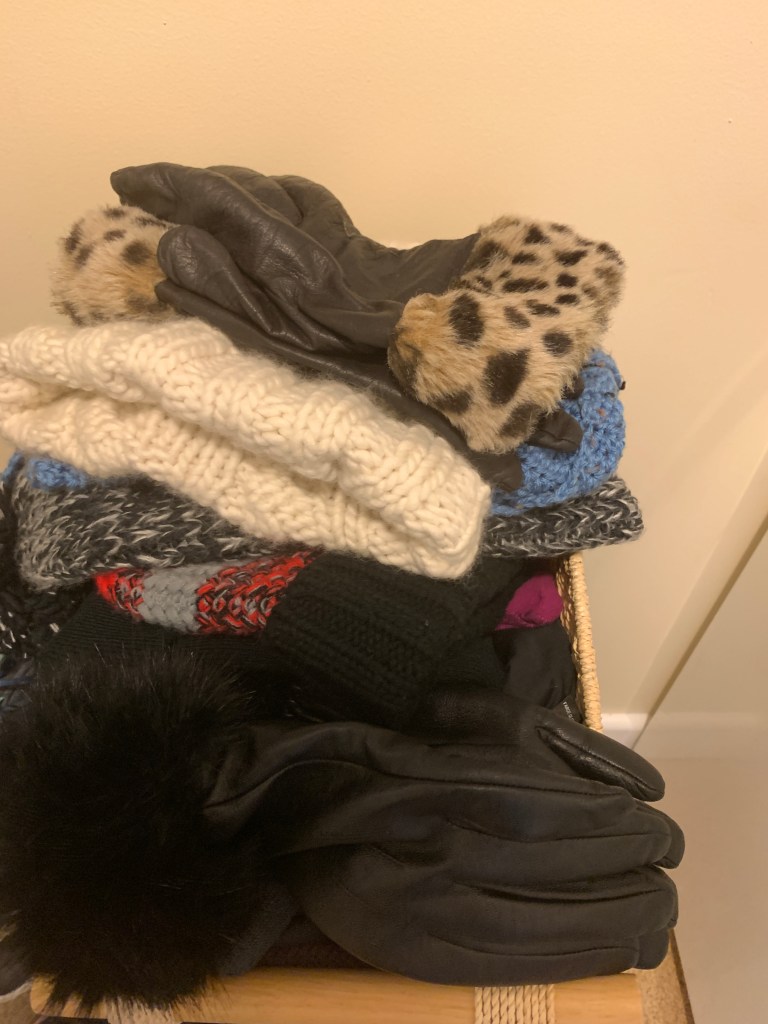
In fact I think what I’ve come to understand over the last year is that really there are two seasons in the Falklands not four and the change from one to the other is gradual and mostly clearly seen in animal behaviour and the farming cycle. My response is to change from my summer coat (long, green, waterproof) to my winter coat (long, green, highly padded) and to ensure that my hat, scarf, glove box is stocked up and ready for use.

Without doubt we are moving into winter – if nothing else had told me, I would know because the sheep chill factor as announced during the weather forecast is now frequently described as “hazardous to newly shorn sheep”.
 Where is Sarah?
Loved reading this and seeing your seasons through your eyes (and wardrobe!).
We had our Spring (summer even?) last weekend. Rain again today.
LikeLike