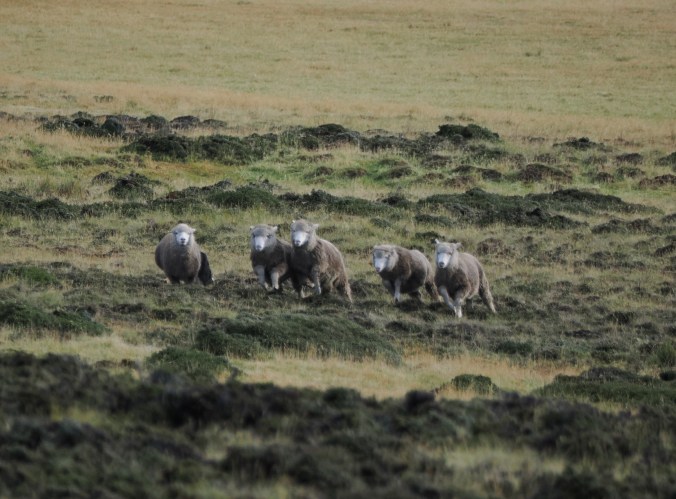
Sheep are the farm animal which is synonymous with the Falkland Islands, there are about 500,000 of them across the Islands. However, when you get to the Islands it may take you a while to see them. Partly this is because they have a lot of land to roam in (about 1 sheep per 10 acres) and partly because their fleeces are dull grey on the surface which makes them blend into the landscape.
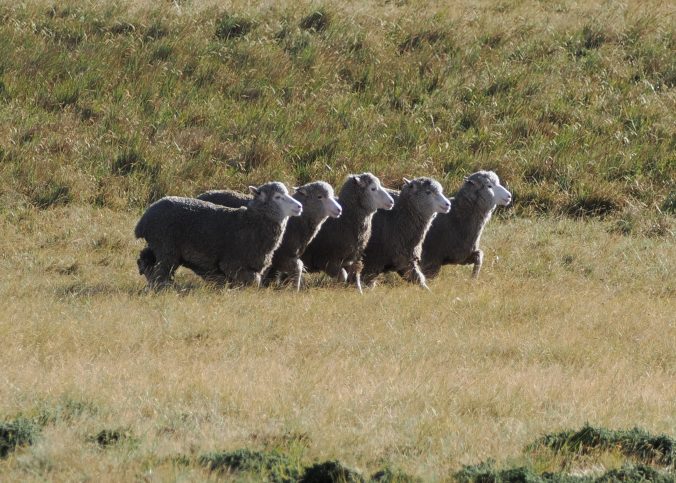
The other reason they are hard to see is their flightiness. What do I mean? Well in the UK, if you’re out walking and see sheep, they will probably ignore you or at most lift their heads and have a look at you. In the Falklands, the first moment that a sheep sees you, it’s off running as hard as it can. Most of the time your view of a Falklands’ sheep is it disappearing into the distance.
It doesn’t matter whether you are on foot, in a vehicle or a plane – once the sheep spot you, they’re off.
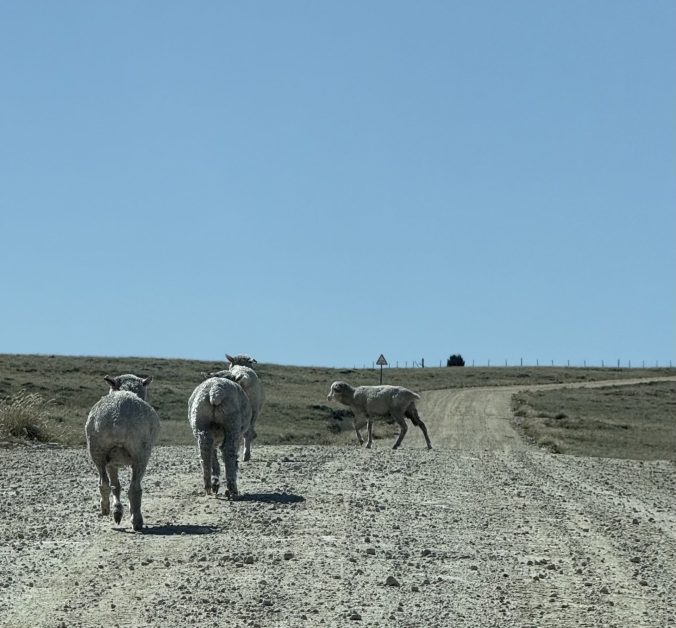
My theory on this is that sheep in the Falkland Islands live such free-range and wild lives that they don’t see people from one week to the next. They fend for themselves – they lamb on their own, they survive (or not) the weather on their own. The only time they see people is when they are gathered (brought together and moved) for major events in their lives, such as:
- annual shearing of their fleeces
- lamb marking – when lambs are vaccinated, given ear tags, tails are docked and male lambs are castrated
- lambs being weaned from their mothers
- moved from one enormous pasture to another
So, clearly the right thing to do when seeing a human, is run. Unless of course it’s a pet sheep but that’s a whole different post.
The independent life of a Falkland Islands sheep means that they are cautious of people and this makes them hard work for the working dogs. I saw this at a sheep dog trials recently – the experienced dogs gained control of their sheep and were able to move them, more or less where they wanted – even if it did take quite a lot staring them down….
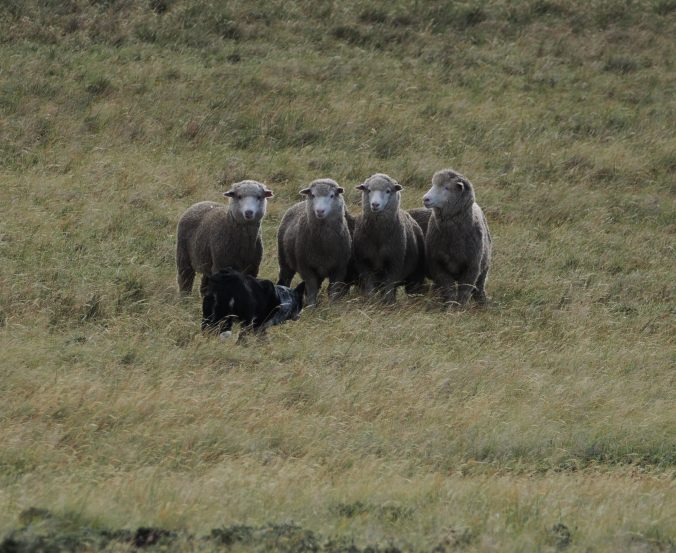
But this did not always work, which could result in a lot of flat out running to try and catch up with them and control them. For one young dog, it went so wrong – or for the sheep, so right – that the dog ended up driving the sheep in completely the opposite direction of what was required and it was only solved by the shepherd getting in a car to catch up and retrieve the dog. 1 – 0 to the sheep.