-
Wind
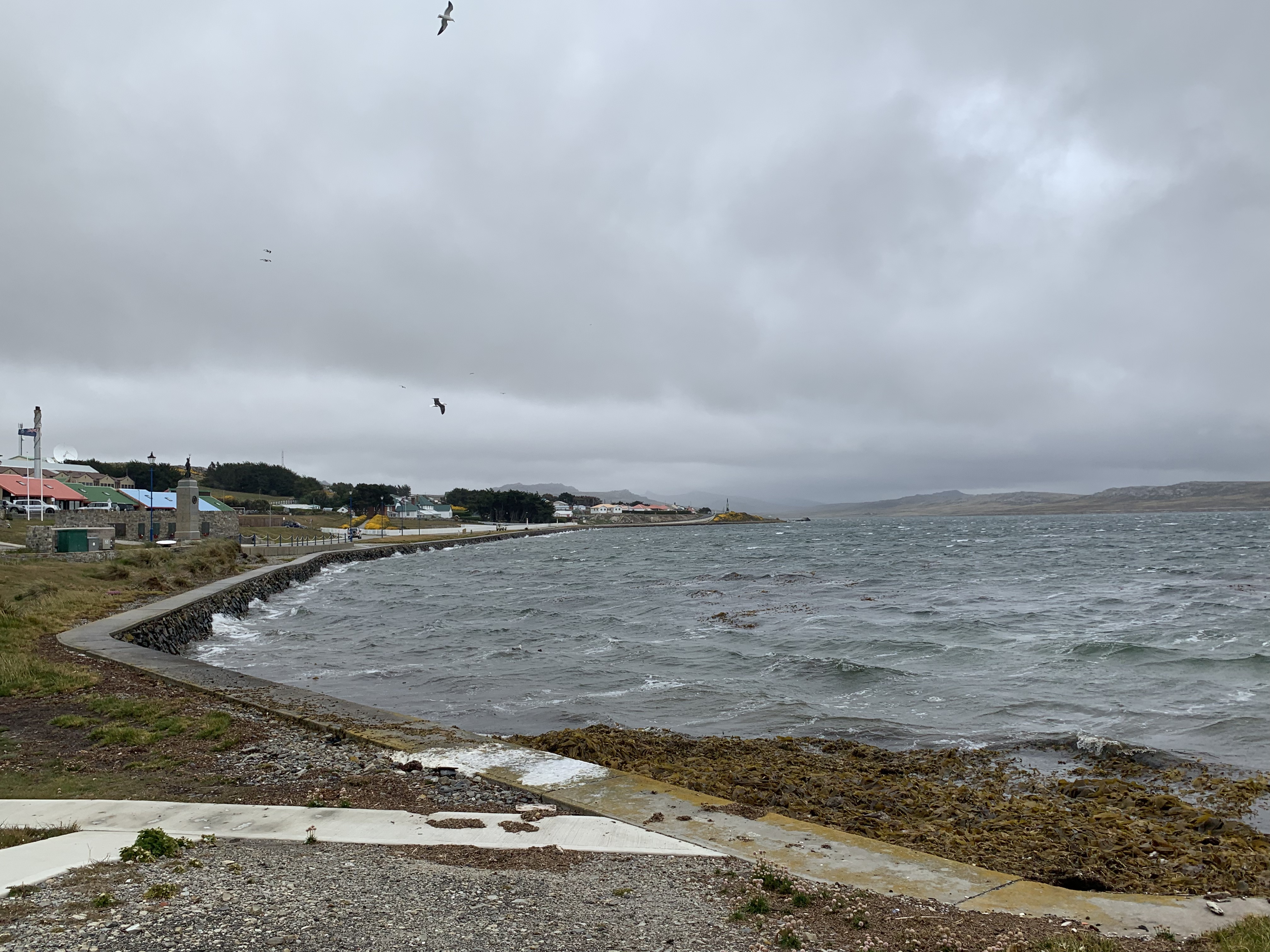
A perceptive friend said recently “I suppose the thing about Wind is, you can’t see it in photographs” and she’s right, it’s hard to see in photographs.
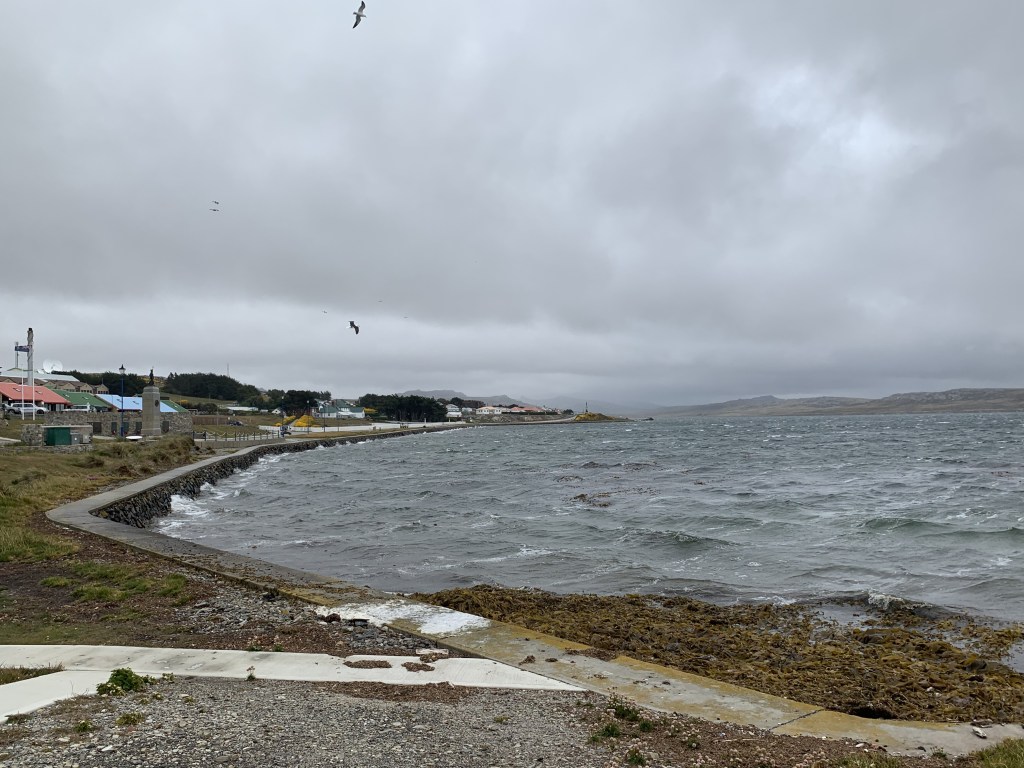
This is a very, very windy day – a blow you sideways day, a plane can’t land day – but it doesn’t show in photos This is a shame, as it’s true that a defining feature of the Falklands is wind. I’m learning that a calm day is a treat to be enjoyed, and that a calm, sunny evening should be taken advantage of at once. Going to see the penguins at Yorke Bay on their sandy beach on a windy day is an exfoliating experience and you end up chewing sand for some hours later.
Wind has to be taken account of in all sorts of everyday living – I first thought about this while hanging up a duvet cover on the washing line to dry. My rookie mistake (and an embarassing one as a sailor, who should know better) is that you absolutely need to be upwind of what you’re trying to hang up. You need ultra grippy clothes pegs and lots of them.
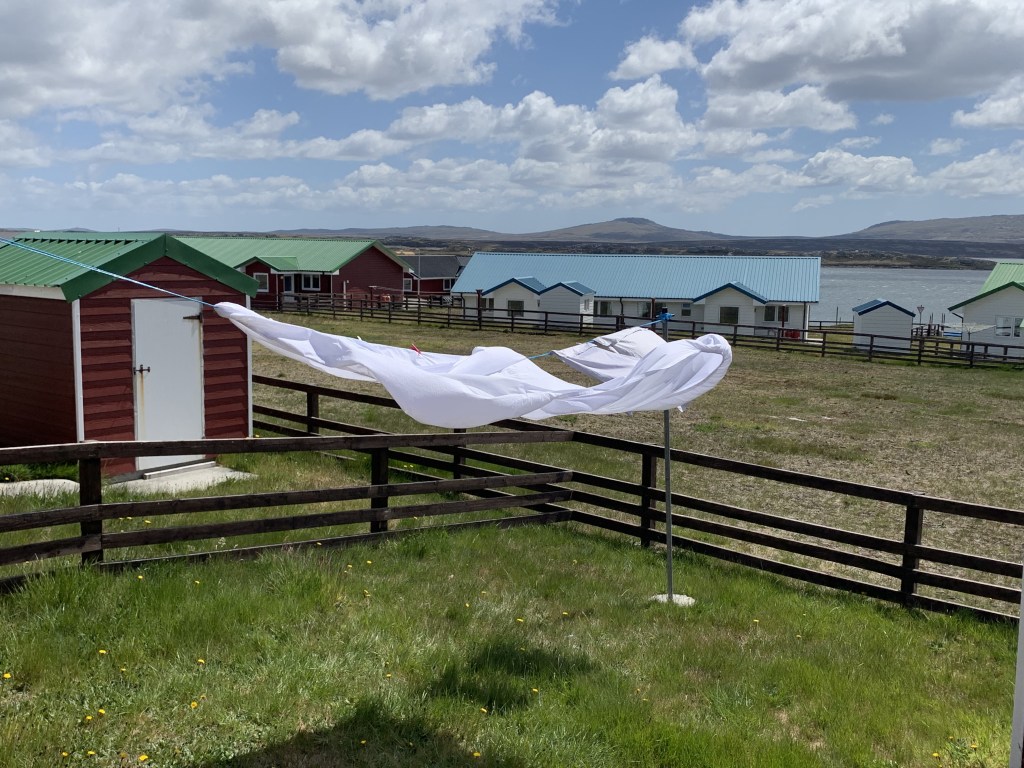
Typical Falklands drying weather You also need to open car doors very carefully, holding on to them and if possible park into the wind, so your doors aren’t wrenched off their hinges or banging into other cars.
So to give you a feel for Falklands wind, here is a screenshot from the Windy app recently (speeds are in knots – 32 is a gale).
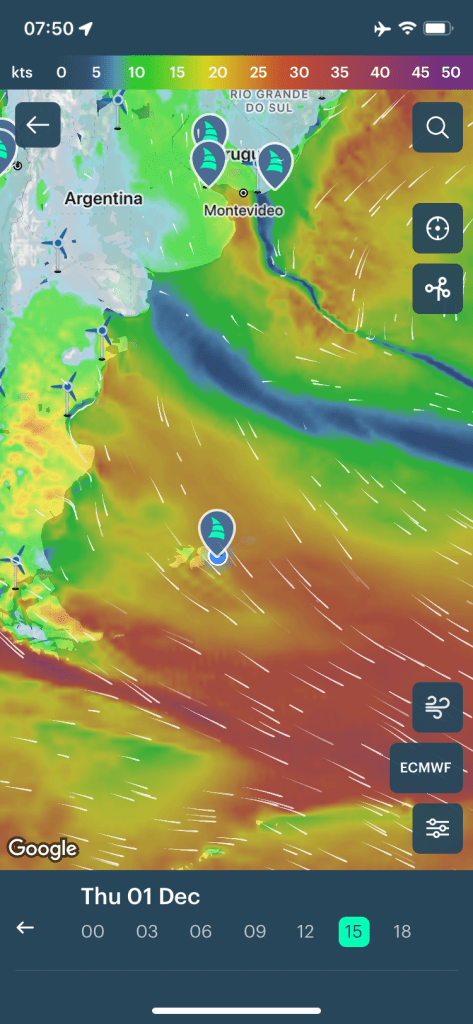
Looking at Windy now the next few days looking forward are quite good, with quite a few bits of blue (calm) and green (pleasant breeze) and no red until next Friday night. Although everything can change quite quickly.
The moral of all this, is that the Falklands is not somewhere to live if you care about your hairstyle and any hats need to be very firmly on your head, which might explain the general preference for beanies and bobble hats!
-
Visitors
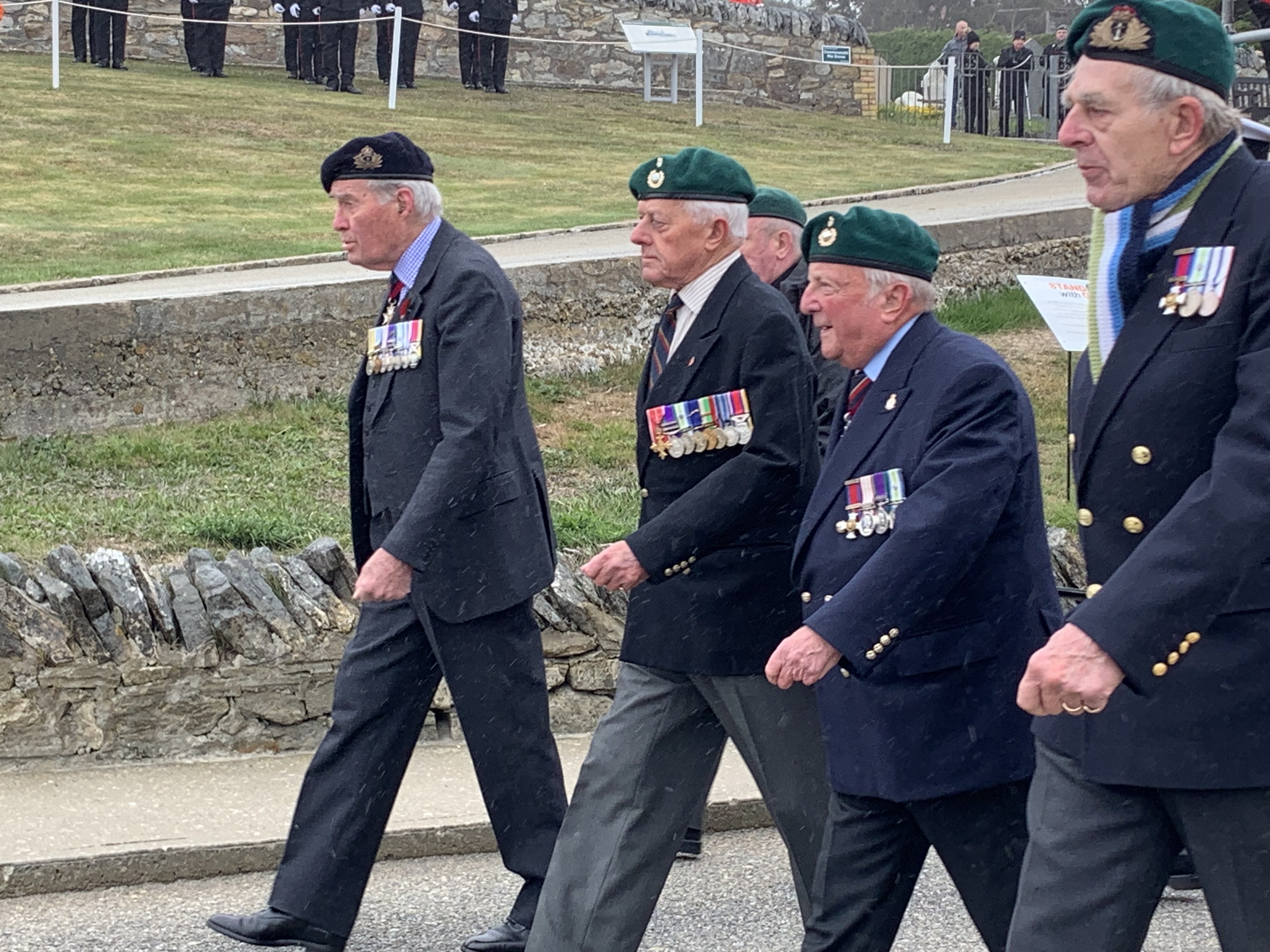
November has been a very busy month in the Islands for visitors – I’m not sure if it’s the same every year or whether this one was unusual – time will tell!
It started with the arrival of a very large group of veterans and next of kin, of those who served in the war in 1982. Veterans regularly visit the Islands, so much so that there some years ago a charity built Liberty Lodge, which provides free self-catering accommodation for visiting veterans. There is a very powerful sense of gratitude to the veterans for liberating the Islands and a community approach to organising activities for them when they come back.
As this is the 40th year after Liberation, the military laid on a special flight to bring veterans here – around 130 people came. Such a large group cannot be housed in the Lodge or in the hotels, so the call went out for people to host veterans in their homes, or to look after them in self-catering accommodation (which is what I did). There was also a call for people to drive during the visit, so that veterans could visit sites personal to them or see wildlife.
It was a very moving time, many people had come for the first time and were fearful of what they would feel. There were several acts of remembrance, which are particularly moving at sites linked to particular events such as the Welsh Guards memorial overlooking Bluff Cove or the cemetery at San Carlos, as well as on 11th November and on Remembrance Sunday. However, it also appears that visiting is a cathartic experience for most, as they learn about what happened after the war and how the islanders live and the developments that have happened and were made possible by liberation.
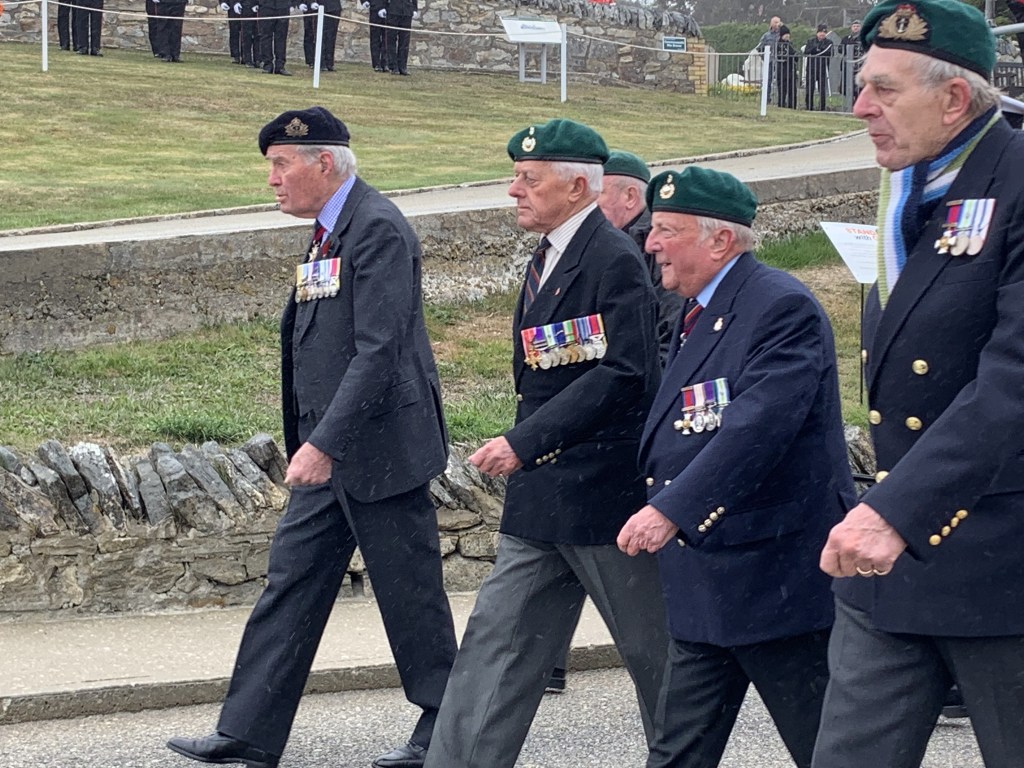
Remembrance Sunday Parade After a full 6 day visit, the veterans flight left on Tuesday and late that Thursday, the Princess Royal arrived and on the same flight there was an all parliamentary group of politicians – so two sets of visitors on one flight.
The Princess Royal’s visit is particularly to mark the occasion of Stanley being made a city during the Queen’s 70th jubilee however she was very busy with a range of activities throughout her stay.
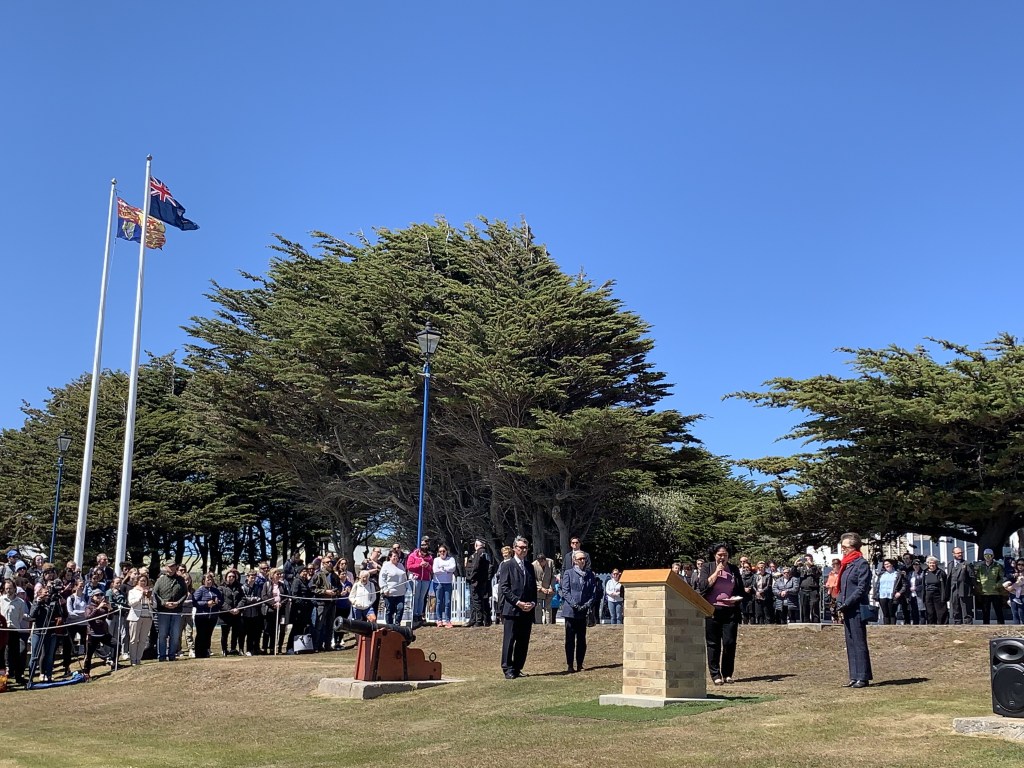
Stanley becomes a city – L to R – Sir Tim Laurence, Governor Alison Blake, MLA Leona Roberts, HRH The Princess Royal On her first day here she visited both schools and the college – which meant that we’d been putting a lot of time in recent weeks into organising those visits and I became pen pals for a time with her office in Buckingham Palace, sending accurate timings, lists of people who would be presented, biographies and descriptions of each organisation. We themed the visits across the educational settings to focus on: Camp Education (how we educate rural children who live at distance from Stanley); SEND education – there is no separate, specialist provision here, the schools are completely inclusive; vocational education and training, which is developing. Princess Anne officially opened the college, which should have happened in 2020 but of course was delayed by the pandemic. Her visits to Education were very successful – everyone felt we’d showed off the best of each organisation and students and staff really enjoyed explaining what they were studying or teaching.
Later this week we’ll be showing the Parliamentarians around Education and then there is a break until the next guests, who will be the Lord Mayors of Whitby and Portsmouth – as Stanley is twinned with both places. I suspect that won’t be the end of our involvement with visitors though, as for example in February the winners of a sixth form competition are coming to the Islands with Ben Fogle (no I don’t know why Ben Fogle is involved, but I’m quite keen to meet him!)
It’s fun having visitors and a bit disruptive, but what I am learning is how important it is as part of diplomacy – developing wider knowledge of what the Falkland Islands is today and what it wants to be, so that the Islanders always have the ability to decide their own future.
-
Whale Point
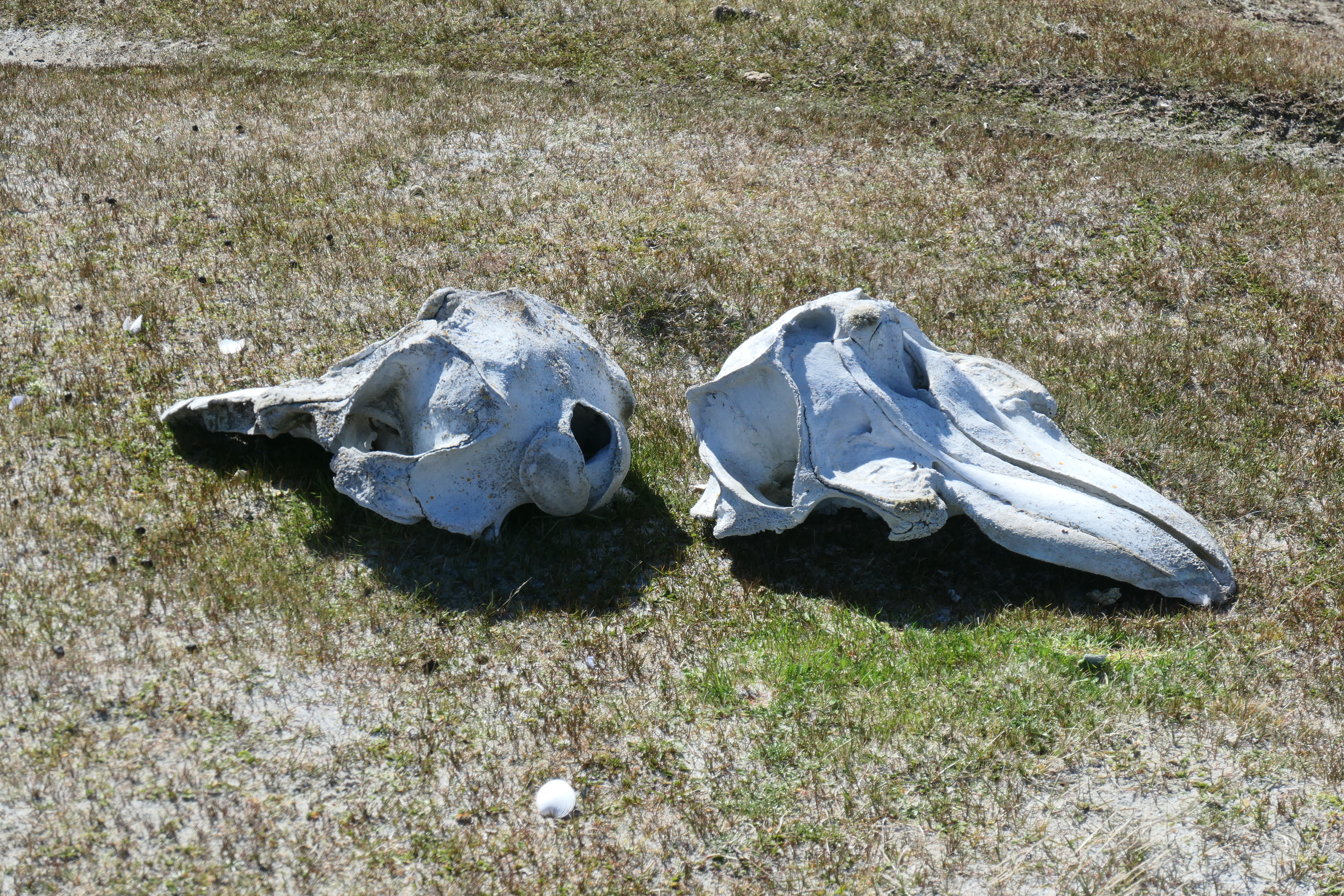
A couple of weeks ago, I went with a group to Whale Point – which is a noted wildlife spot on East Falkland. You need to ask the farm’s permission before you go and we were lucky to be given it, as lambing was well underway and the sheep are pretty wild and easily disturbed by cars and young lambs are very stupid… more on this later.
We took two cars as we were going to be “camp driving” this means off road driving on “tracks”, so you need serious off road cars and you go into twos. Two, so that one can pull the other out if its gets stuck. We drove for about 45 minutes out of Stanley (on the tarmac road) towards Mount Pleasant Camp and just past the turning to Fitzroy we turned off the road to start across the farmland. There were vehicle tracks, but you need a good sense of direction and a map if possible to keep going to the sea (maps are hard to get, there are few printed and these are mainly held by the military).
After a lot of bumping and a spectacularly steep slope down to a river, we made the right choices and arrived at the first beach. This is called Whale Point because there were a lot of whale skeletons there, possibly from a mass stranding in the past. Over time they’ve gradually weathered and disappeared but we did see some.
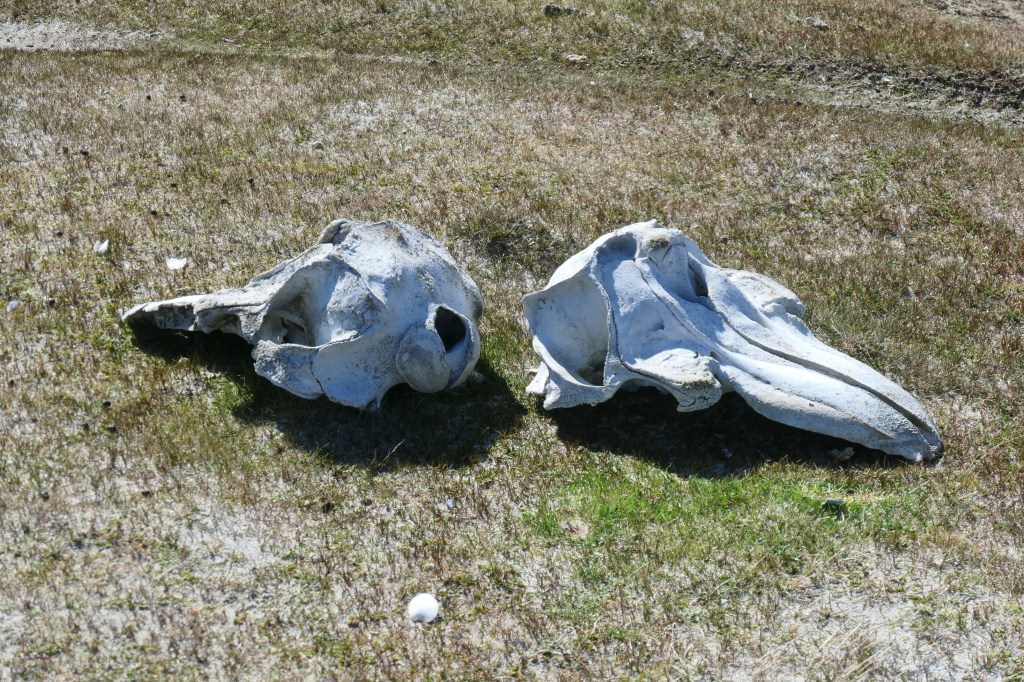
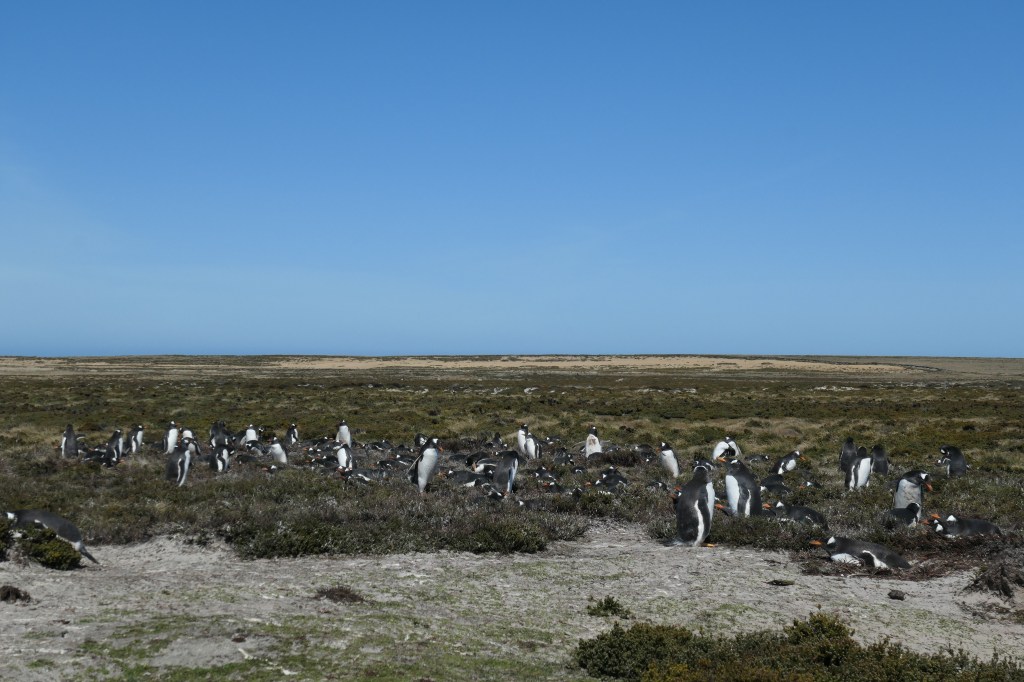
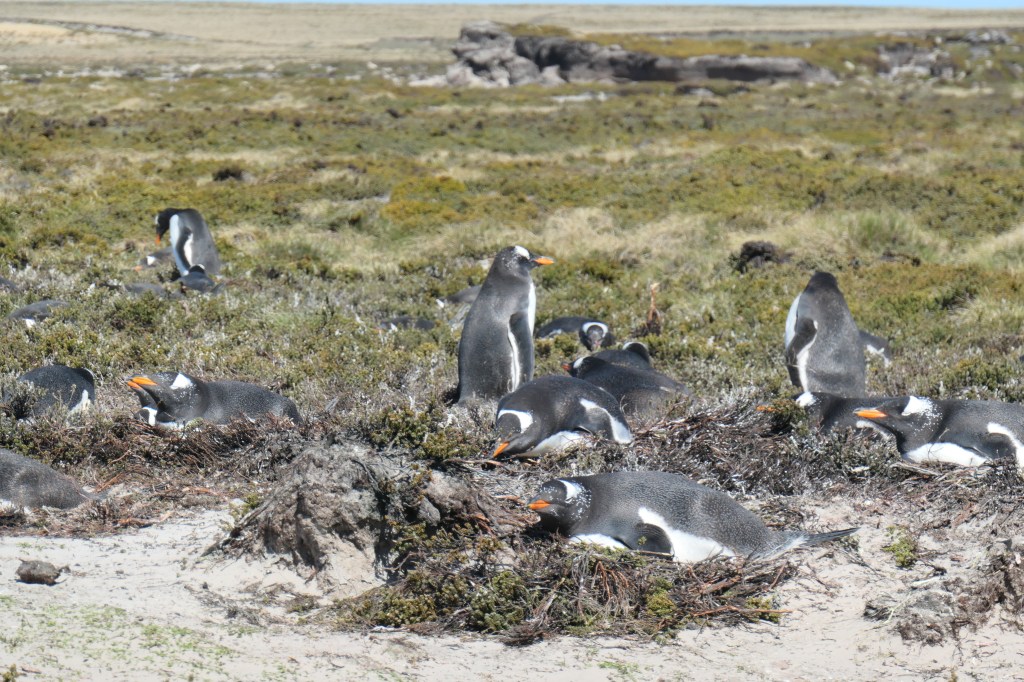
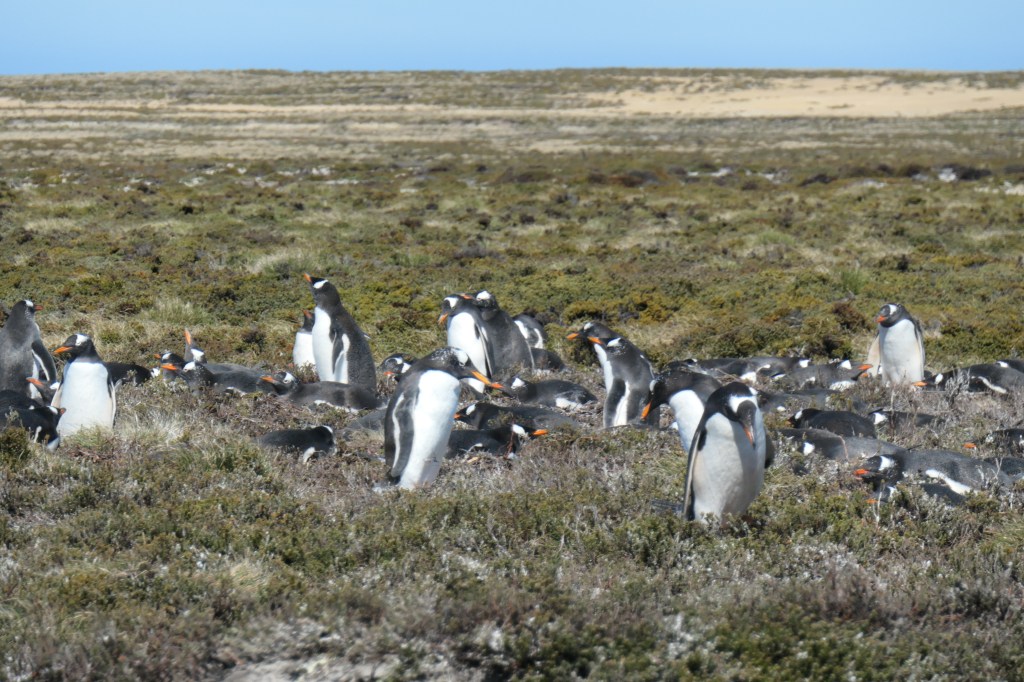
The other attraction here is a Gentoo penguin colony – which has a nesting site about a 1km from the beach. The Gentoos trot backwards and forwards to the colony, always looking in a hurry, as they lean forward, with their wings outstretched and scurrying along. At the colony they were nest building and getting ready to lay eggs. We were able to quietly get very close and watch as they squabbled about territory, stole each others nest material and had a rest before the hard work of parenthood begins.
We went back to the cars and did some more bouncy driving towards a bay in which there is a shipwreck. At this point we did start to see a lot of ewes with young lambs. When the sheep see the cars they tend to move off quite quickly and their lambs do not always go with them and sometimes become separated. We had been warned about this and the drill in this situation was, stay in the car and turn the engine off and wait. If you stay in the car, but leave the engine on, the lamb can’t hear the mother calling. If you get out the lamb may come to you, but the mother won’t and then they can become permanently separated. So you sit still, turn the engine off and wait – we had been told it could take up to 30 minutes.
Both cars had to stop a couple of times and then just as we could see the wreck in the distance we had an impasse. A ewe had a very, very young lamb (an hour old? less?) and it was lying near the track. She tried to get it to move but although it could just about walk, it definitely couldn’t manage to follow her across the tussocky terrain. After about 20 minutes of waiting we decided that the answer was to reverse up the track and do a multi-point turn, fortunately without getting stuck, and go back to the beach and find a spot where we could get out of the wind for lunch.
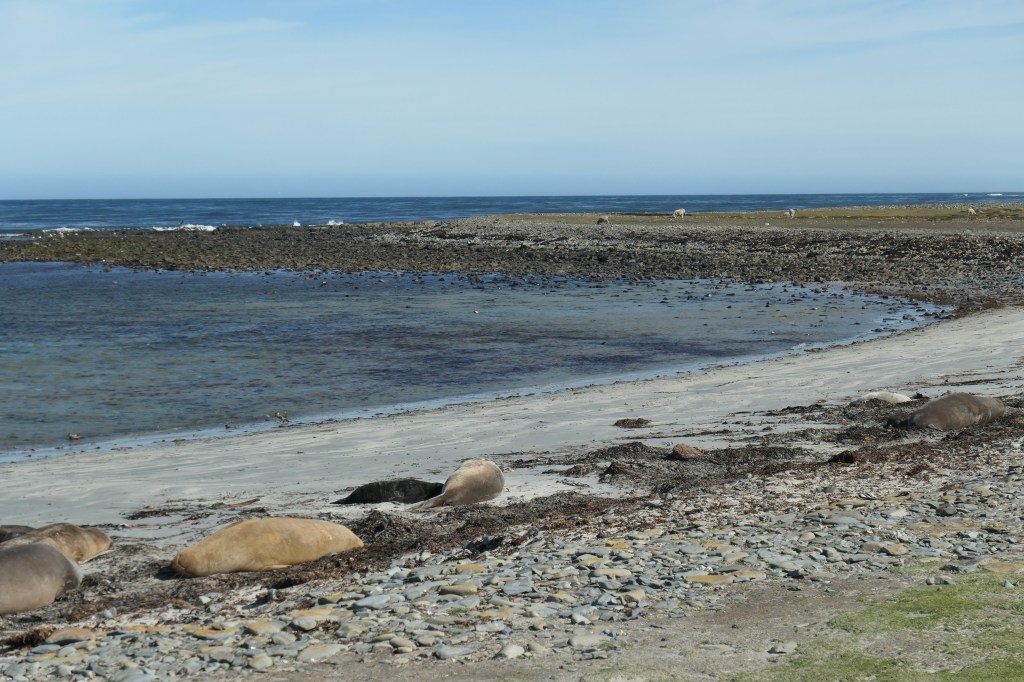
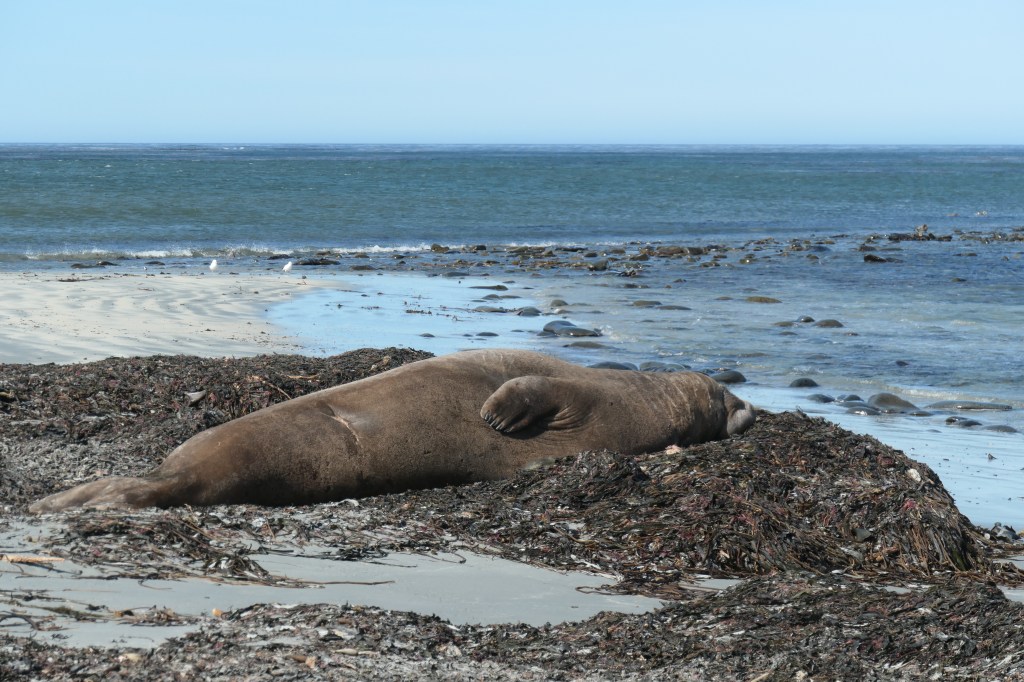
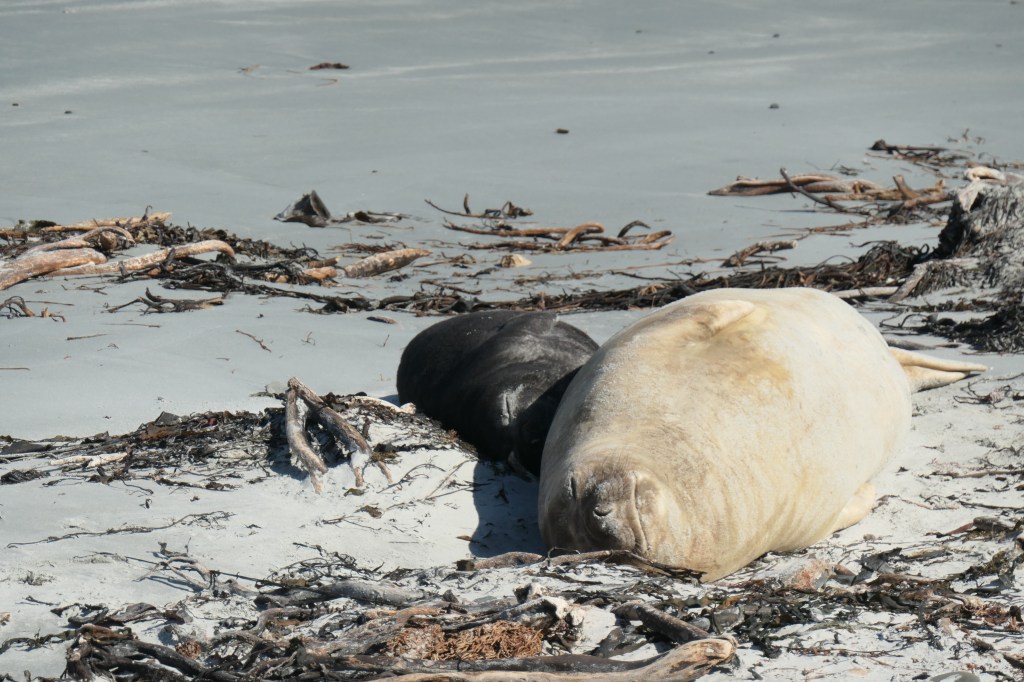
Our last stop of the day was to go and see the Elephant seals and their new pups, on another beach where they like to haul out, give birth and mate. Elephant seals are the largest seals in the world and like all seals they have lovely eyes, but they are very large and the males are massive and when they fight are really something to see. However, today all was peace and tranquillity.
After we’d watched the seals, we we retraced our bumpy tracks back to the road and made our way home.
-
Cars

Another popular question before I moved was, “Will you need a car?” The answer is definitely yes! Obviously I didn’t have a car when I arrived. It was still the very early days of spring (think early March) and the weather was extremely variable, cold and sometimes rainy. My house is only 2 miles from the centre of Stanley – but walking into a stiff, head on wind and rain is not that enjoyable – the wind direction is generally westerly, which is the direction I walk to get to work. Fortunately others were quick to give me lifts – in fact I didn’t manage to get anyone to let me walk home for the first few days.
When I insisted on walking home the first time, I noticed that this is definitely odd behaviour – in 40 minutes of walking, I met precisely one other person who was walking their dog. It was going home time so lots of people were about, but they were all in their cars. Others confirmed that it’s true, locals drive everywhere even a few hundred metres. I can see that this is probably a good thing in winter but I’m not so sure that it’s necessary all the time in the summer.
There are no buses in Stanley (apart from tourist ones) and a few taxis, so really to get out and about – to go to the supermarket, or to walk near Stanley or to see the penguins you do need a car. But what sort can you buy and what’s a good idea?
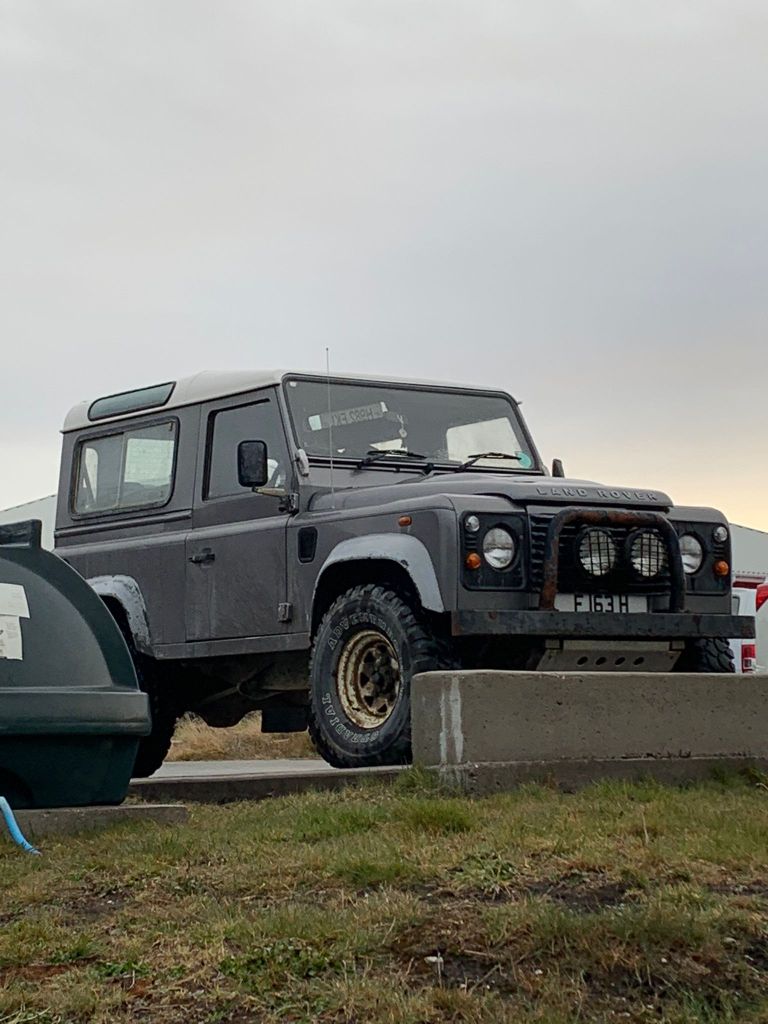
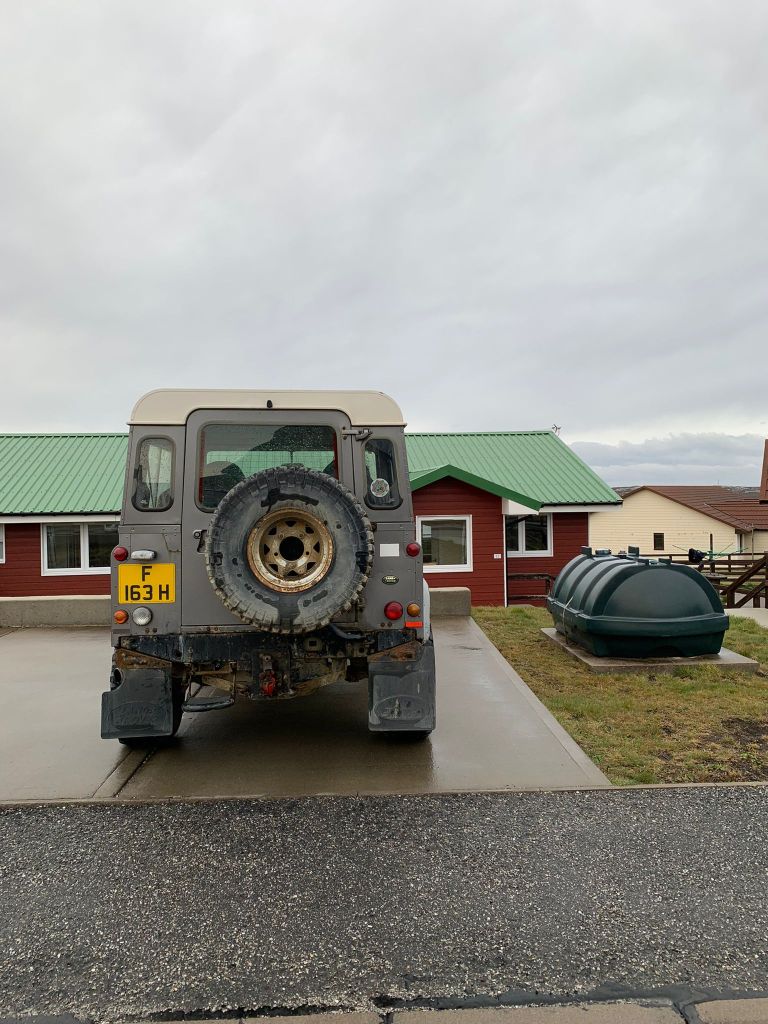
The only brand new vehicles sold here are Landrovers – there is a dealer in town, who will get you whatever you want. They and another garage import used cars and sell them on – pretty much everything is at least All Wheel Drive. You can also decide to ship a car from the UK to the Islands – which might be how I’ve seen a Fiat Uno and an old Jaguar in the streets of Stanley – non 4WD cars are referred to as summer cars – and households with garages may have one. The other way to buy a car is to buy one off someone else and there’s a Facebook group for car sales (there’s a Facebook group for everything important here – it’s a key part of how the Islands operate!). I started to take a keen interest in what everyone was driving to try and get my eye in.
At the end of my first week I bought a car! Someone who was leaving the islands in October was selling their car, someone else told me it was a good deal, bizarrely the person selling and I had met once in the UK at a Further Education meeting in Hampshire. I managed to agree an appointment to see it first on the Saturday. We sat in the (enormous) car and shared how we both knew nothing about cars. He told me its history, I drove it round the block, they told me what they wanted and I agreed to pay it – I knew there were two other people coming that afternoon and cars go very quickly here. So that was it, I’d bought a car. Reassuringly both the other people who came to see it wanted to buy it as well and they’d opened the bonnet and had a look. Only slight issue was that I wouldn’t get the car until 22nd October and that was quite a long way away.
So for a week I used a pool car to get around – which turned out to be a Discovery

This was quite a change in size from my Seat Ibiza…. the bonnet seemed to go on for ever.
Then my very kind PA said, ” I could lend you my “spare” rover – so she did – for 4 weeks. I’m not sure she’s going to let me give her anything for the loan, so I’ve filled it up.
I’ve grown fond of the rover – although it has one particular hazard… it’s had a lift kit fitted to give it height off the ground for more clearance and you might notice it doesn’t have any steps… so getting in and out is a challenge. Fortunately I’m tall and the steering wheel helps me haul myself in.
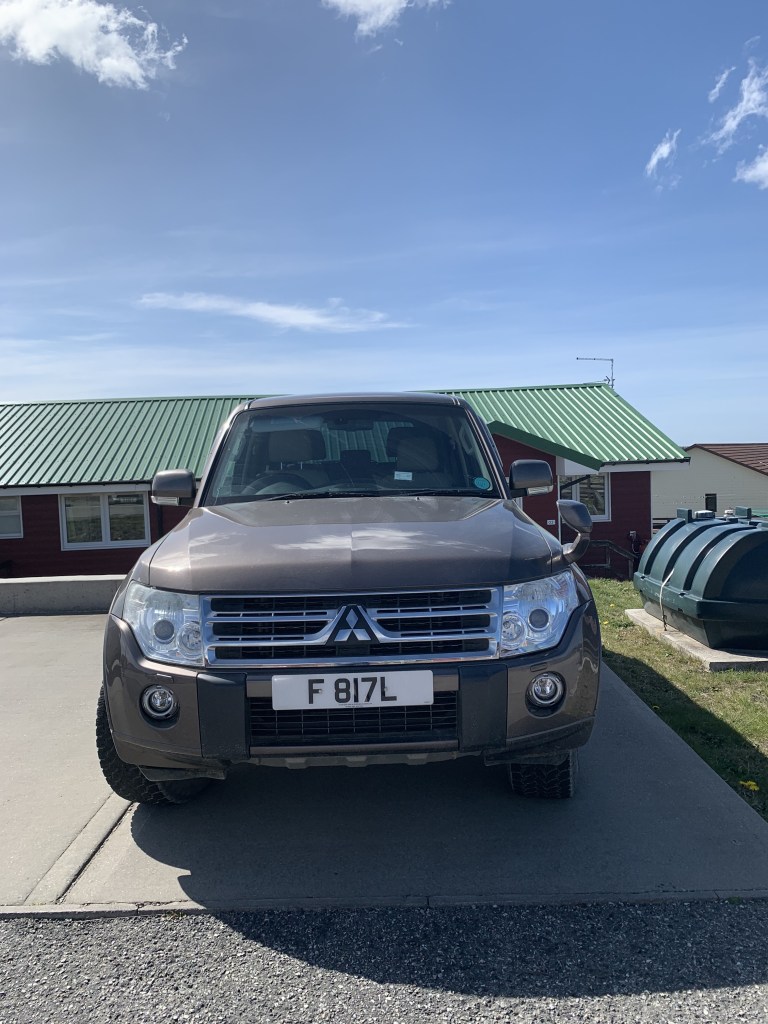
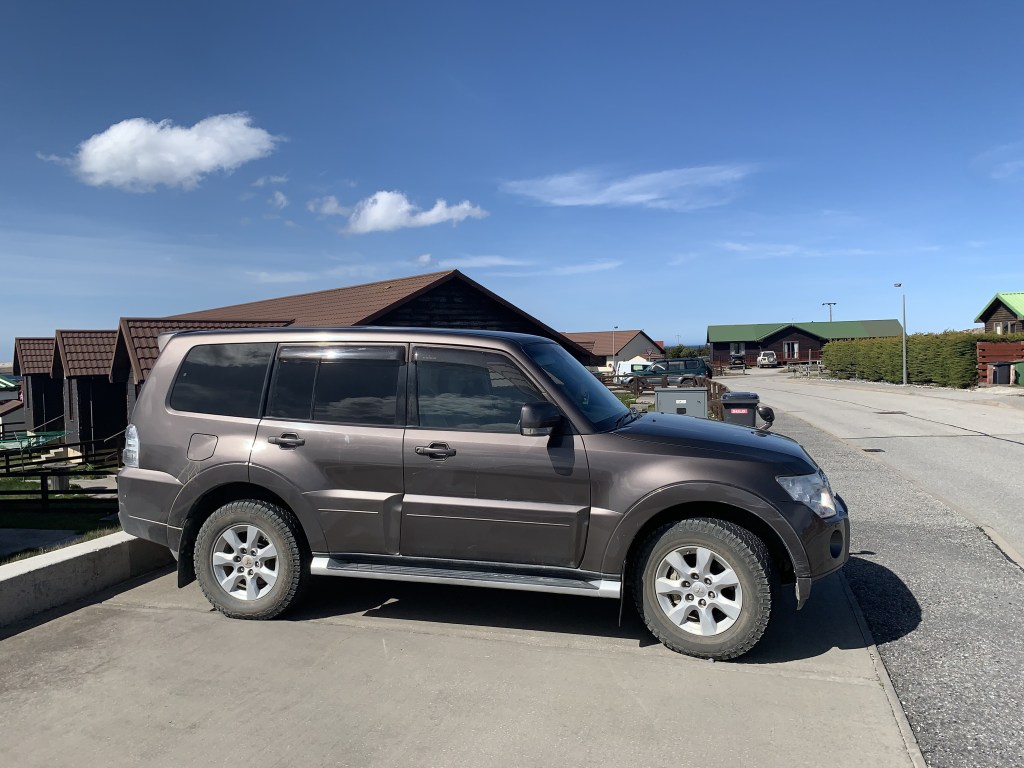
Finally, this week I took delivery of my own car and dropped its previous owners off at the airport. It’s a Mitsubishi Pajero, with 5 seats and a large boot – or 7 seats! It is vast but it’s easy to drive and should do everything off road that I want to do.
It’s definitely a Japanese import as all the useful information on how to put the extra seats up, are in Japanese – as is the screen information system! Some time on Google ahead I feel, trying to work out which menu option is the language choice…
Effectively my little journey through these cars does demonstrate what you’re likely to find in the average car park here. It’s definitely a 4 wheel drive world and there’s a reason for that – but I’ll save that story for another day.
-
Post-work activities…
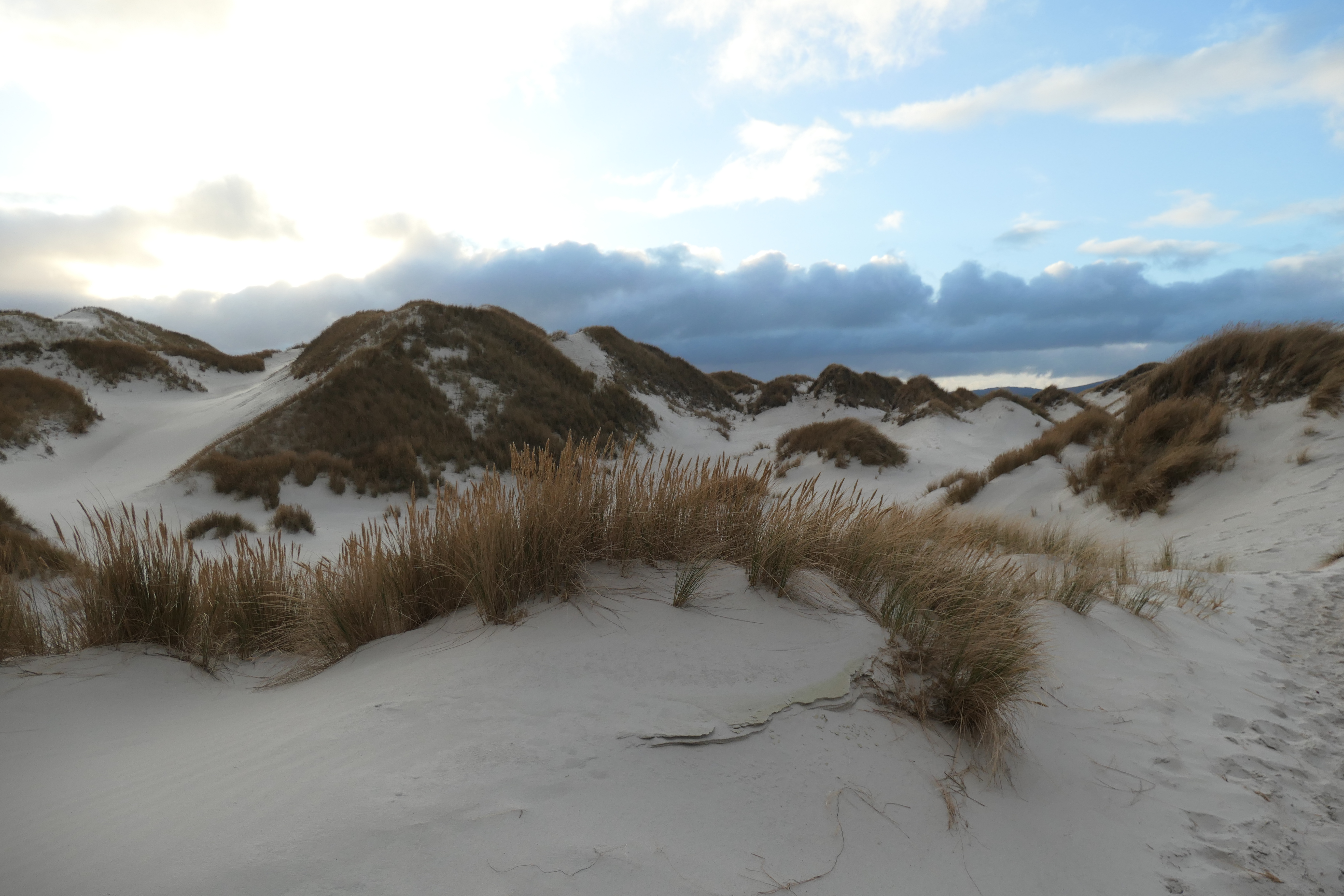
What to do on a Thursday evening after work… go to the sand dunes at Yorke Bay (15 minutes outside Stanley) and watch the Gentoo penguins coming ashore for the evening, starting to pair up and thinking about nests…

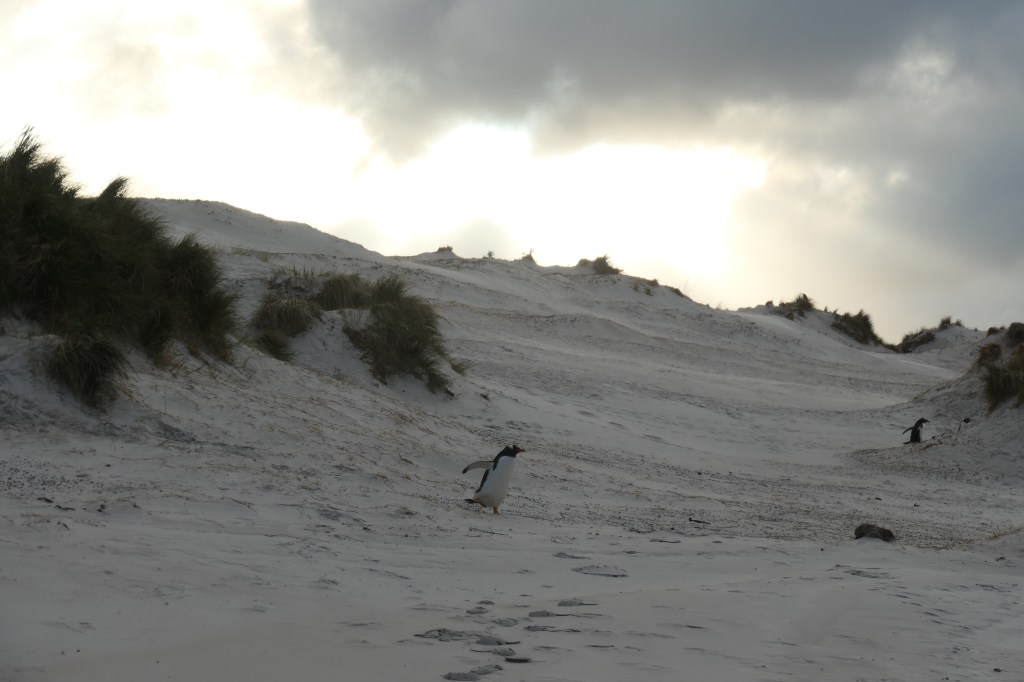
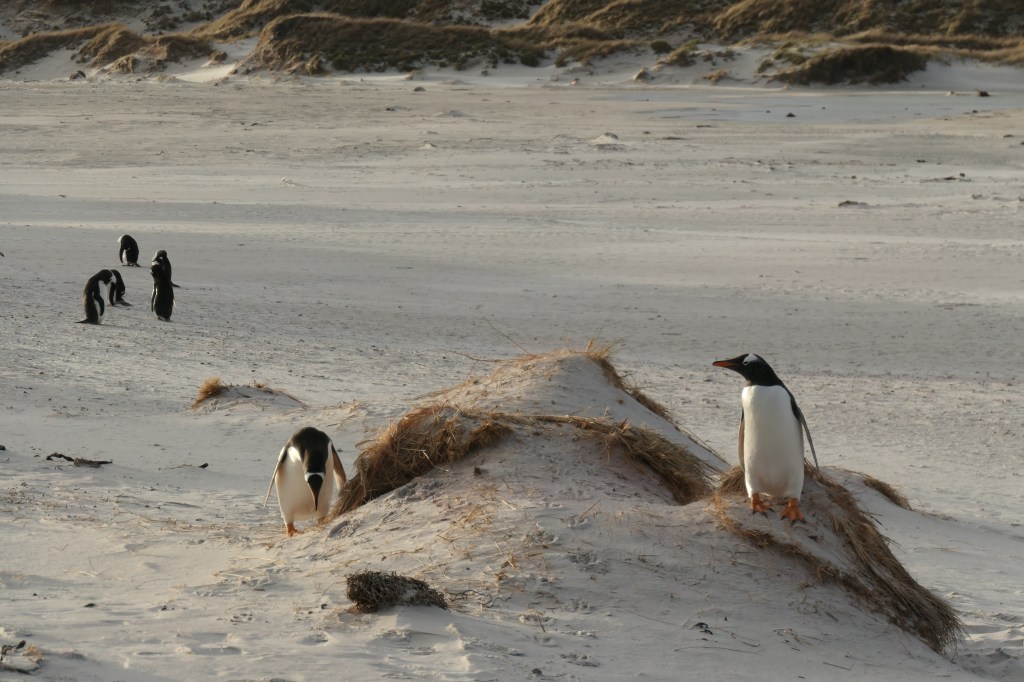

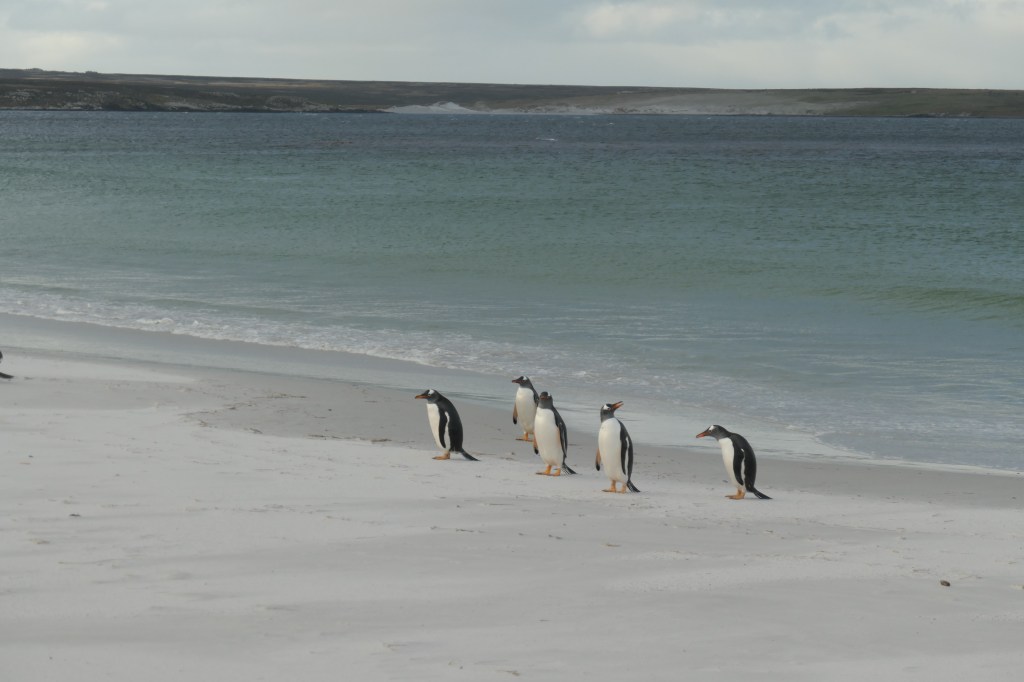
Gentoos live on the Islands all year round and are very common and lovely to watch.
They surf into the beaches in the waves and suddenly pop up out of the water as they come ashore. Certainly keen to get away from the shallow water/beach line – presumably to avoid various predators that prey on them in the shallows where they have less rooom to manouever and escape.
It does feel like such a privilege to be able to do this for the next four years!
-
Food Shopping 101

So what is daily life in the Falkland Islands like? Or more specifically what is daily life in Stanley like – as I can’t speak for life in Camp.
(Camp is the description of everywhere in the Islands that is not Stanley and generally not at Mount Pleasant Camp/Aiport, where the military are. This ranges from places that are a 30 minute drive from Stanley to West Falkland (there’s an occasional ferry between East and West Falkland) and any of the other 100s of small islands, where the only route off is plane, monthly supply ship or your own boat).
An obvious place to start is food shopping.
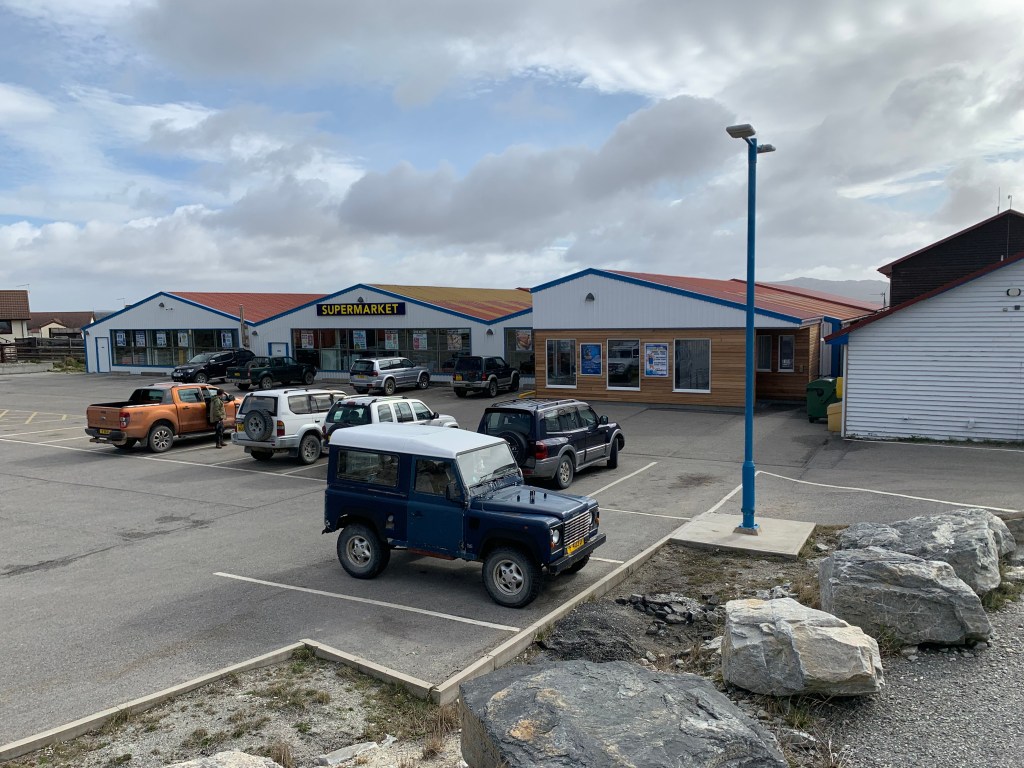
There are now two supermarkets in Stanley – West Store and Chandlery. Despite its name the Chandlery is not a hardware store for boats but a supermarket – it does include a fine range of workwear though.
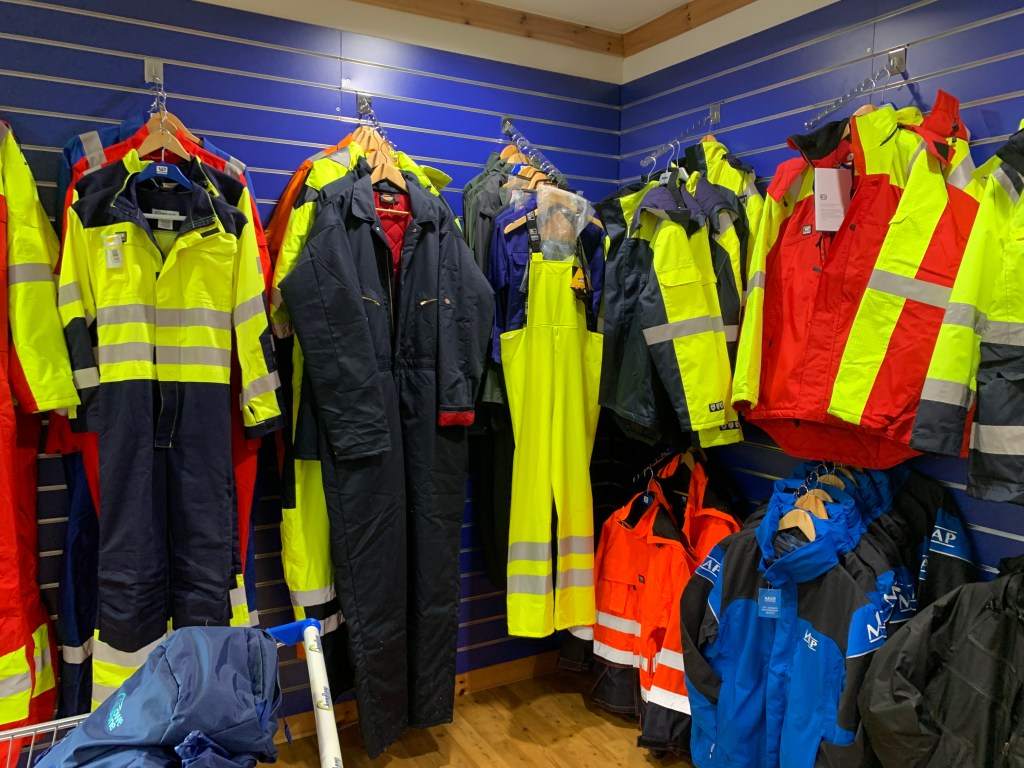
Day to day shopping for food has a few idosyncracies:
Limited choice
For example you can get ground coffee but the choice over all the shops is limited to two or three choices. There are familiar brands – between them they stock goods from Waitrose, Iceland, Co-op and Tesco. However they also have items from South America, South Africa, Saint Helena and others – I think this reflects the diversity of the population.
Not under one roof
Hunt for what you want – you might have to go to more than one shop.
Dates
Don’t look at the date stamps! Sometimes the products are in date – often they aren’t. Apparently to keep prices down the supermarkets buy short life stock and then ship it down. Since no one seems to have food poisoning from this, it suggests that the date stamps on food are a bit of a waste of time for dried, tinned and bottled goods…
Fresh fruit and vegetables
Are limited and expensive – which isn’t really a surprise – there is a market garden that grows some vegetables in the summer and lots of people have well tended vegetable plots, the rest comes in from Chile by plane once a week.
Beef and mutton are incredibly cheap, good and local. Little lamb on sale as the sheep here are bred for wool rather than meat.
All of this leads to more cooking from scratch, less food waste and people who are clear about where their food comes from. Which on the whole feels like a good thing!
-
Have you seen a penguin yet?
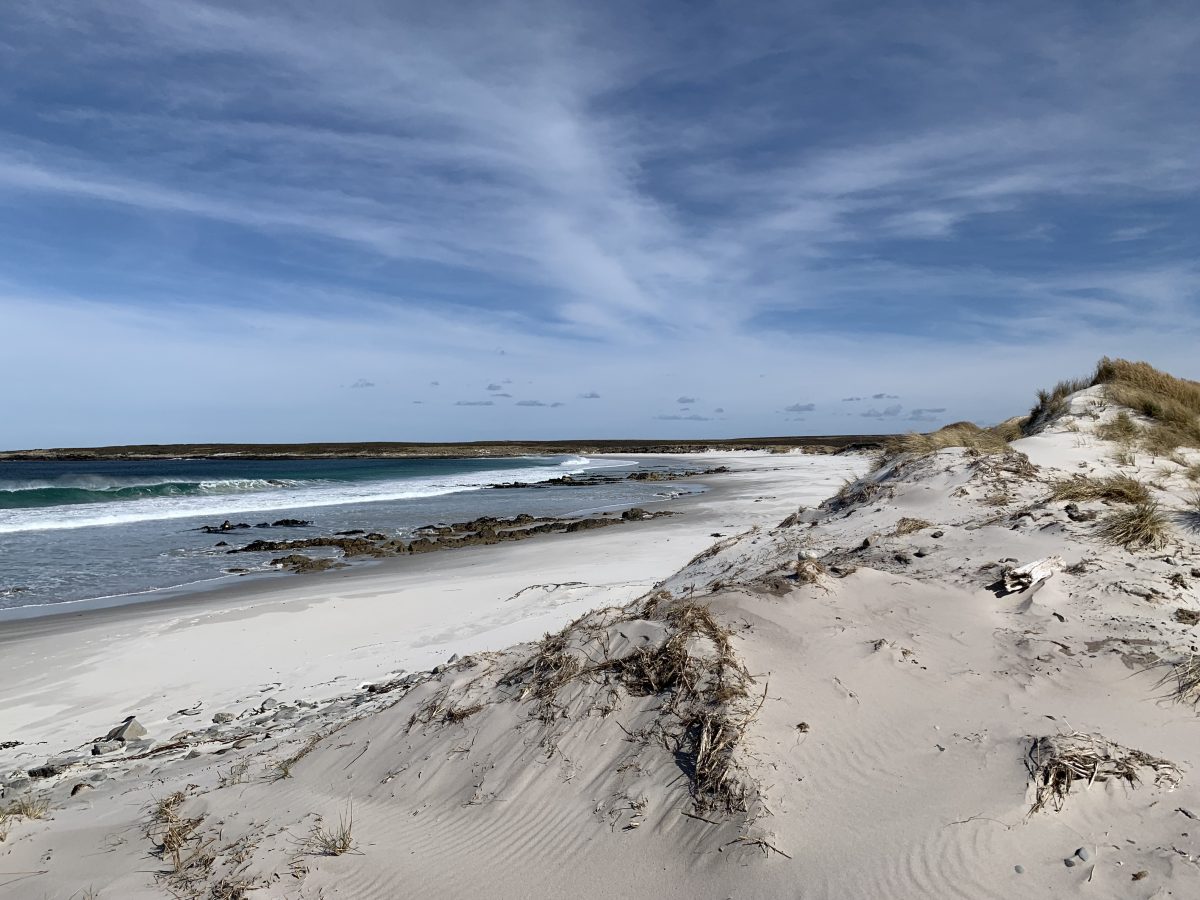
I think it’s fair to say that the most frequently asked question before I came to the Falklands was – How many penguins are there?
The answer is apparently up to a million each year – depending on which information source you look at. There are 5 types of penguin that nest on the Falklands – these are: Magellanic, Gentoo, Kings, Rockhoppers and Macaroni. I have been lucky enough to see all of these on previous visits, but I know you are interested in what I’ve seen this time!
Then on arrival, the most frequently asked question has been – Have you seen a penguin yet? So it seemed only fair to do any early post about penguins.Last weekend I went for a walk to my local beach – Rookery Bay – about 20 minutes walk from my house. It’s a bit of a change from Weston Shore – my local waterfront in Southampton…
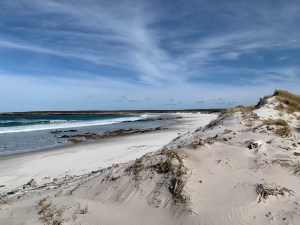
And I did see a couple of Magellanic penguins – who are starting to come ashore to clean out their burrows and prepare for mating.
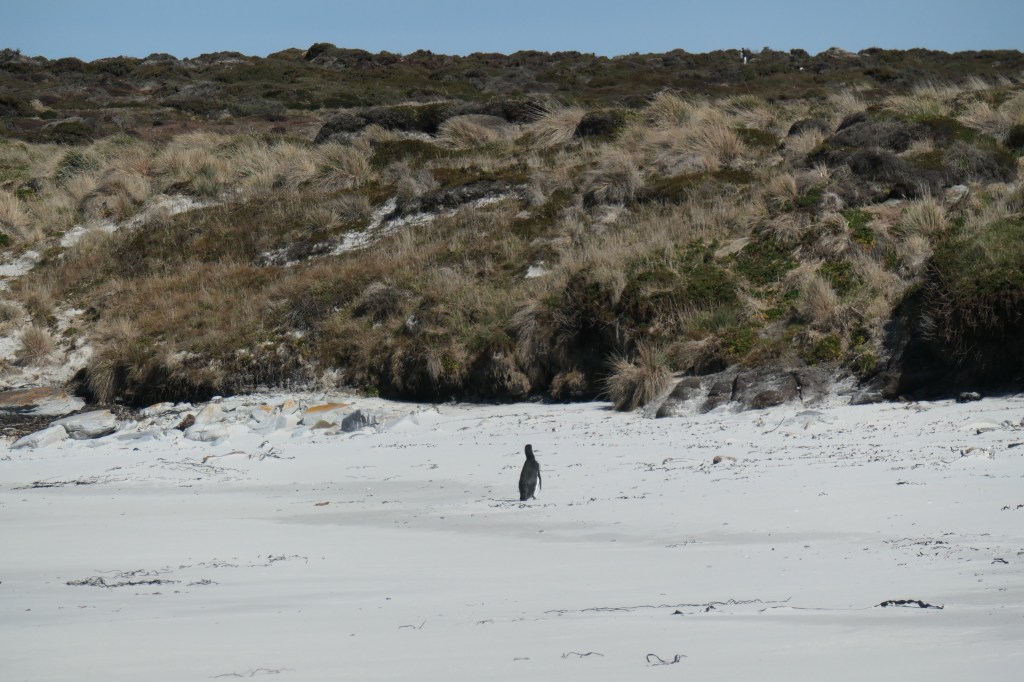
Magellanic penguins choose to nest in burrows near beaches – this one is contemplating the slow waddle and climb up to his burrow. Apparently they are monogamous, the males come ashore first to reclaim their burrows and clean them up – then the females come soon after and egg laying starts in October – so more and more should be arriving. Although I could only hear a couple, I could hear lots – they sound a bit like donkeys braying as they call to each other – a trait they share with the 3 other banded penguins species, including the Jackass in South Africa.
This weekend I drove out to Gypsy Cove – a favourite point for tourists to observe penguins near Stanley. I was walking up the path (which keeps you from treading inadvertently on burrows) when I realised I was being observed
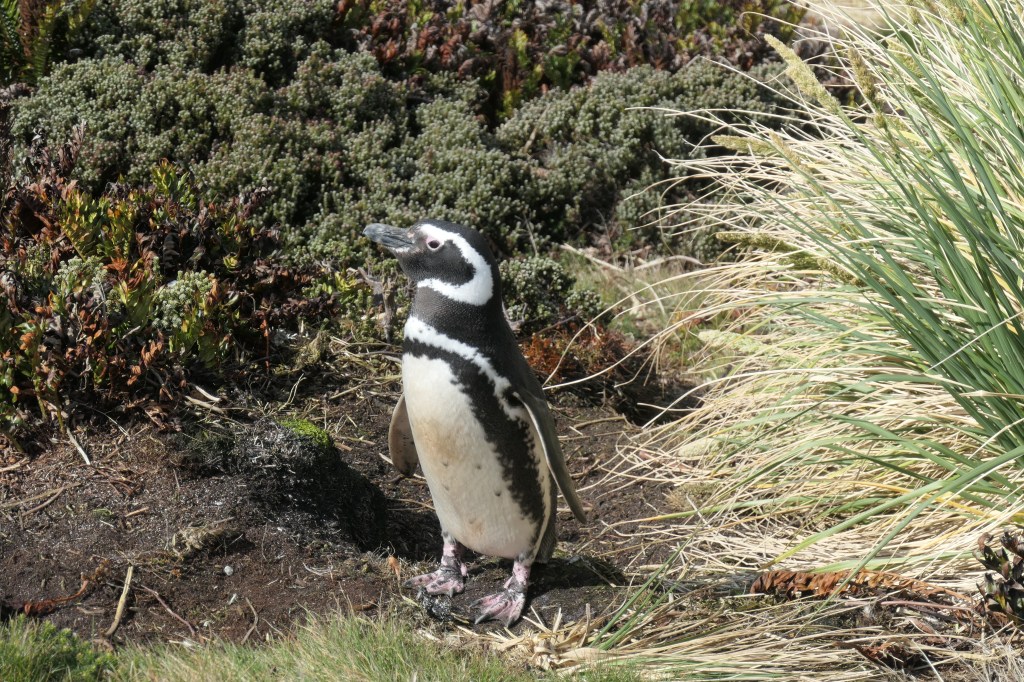
The amazing thing about the Falklands is how relaxed the wildlife is about people – especially when there’s only one of you and you are being quiet. As I went on my way I began to get my eye in for Magellanic penguin spotting, at least being black and white they stand out on the grass!
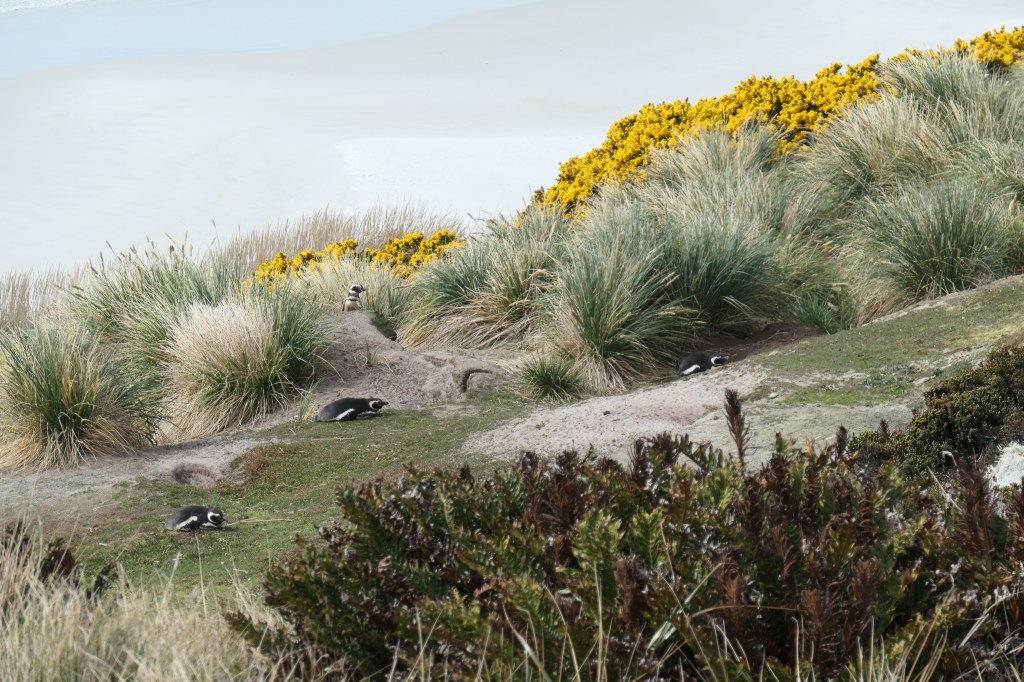
So three weekends in and I’ve seen penguins on two of them – more photos of penguins to come without doubt!
-
Go
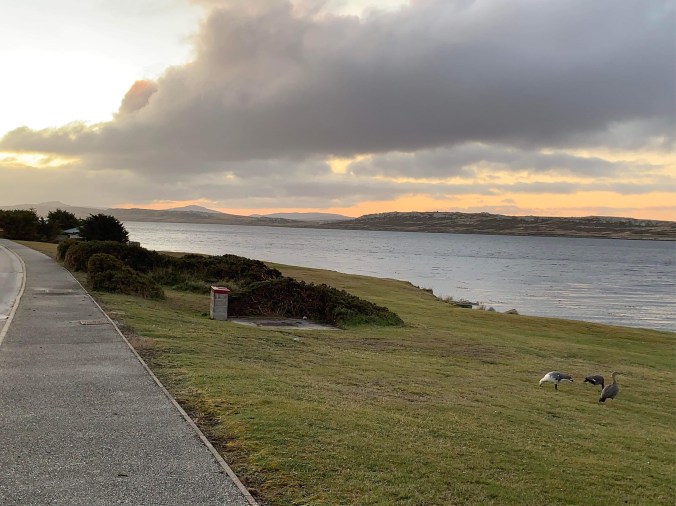
This is the start of my third week already (!!) and there are so many things I could tell you about – one thing you’ll notice is that I have started to figure out how to add photos to the site. Not well necessarily, but a start. In case you hadn’t guessed I’m teaching myself how to use WordPress for this blog. Now more easily accessible as my imac has now arrived in Stanley, so I’m not fiddling about on an ipad and also that I’m getting to grips with what chews up internet data and don’t think I’m going to run out this week!
So a big thing for anyone living in the Falklands is the situation with accessibility of the Internet. There are two issues – speed and cost. Both are governed by the fact that the Islands are entirely dependent on satellite provision of Internet, which makes it slow, limits bandwitch and is expensive. There is no such thing as an unlimited data package here.
But why don’t you have an undersea cable to the Islands? I hear you ask. Well the obvious place to run the cable from is Argentina, so that’s unlikely to happen any time soon. So we live with satellite and maybe one day Elon Musk’s Starlink.
It’s not all doom and gloom, it’s considerably better than it was when I came here in 2012. I haven’t yet wanted to throw my computer through the nearest windowwhen trying to post to this blog (which I did then). However, streaming video from the Internet chews up data and some sites work better than others. In reality it means adjusting how you use the Internet a bit and remembering that DVDs and CDs still exist and work extremely well with no data requirement.
And calling home on WhatsApp delivers a really clear signal (often better than my mobile reception at home) and is much cheaper than using mobile or landlines – ah yes, landlines, remember them? They do exist here, people use them and there’s a real phone book for finding people in. Imagine!
-
Get Set
So this is it – dropped off at Brize Norton, by my kind friend Donna, Sunday evening at 8pm. The flight is not due to leave until 1:10am on Monday morning, but we all have to have checked in by 10:10pm and I’m a bit cautious about what happens at Brize Norton and how long it will all take.
As civilians we are (reasonably) not allowed on base unescorted. What this means in practice, is that you report to Reception at the Main Gate and then wait for a bus or in this case a coach to appear and take you to the terminal, which is quite close by. Then you check in. It is significantly less traumatic than Heathrow this summer(although more functional and less shopping) and then you wait….
The plane takes off on time and the first leg is to Cape Verde, 6.5 hours away. Contrary to most people’s mental image, despite being a military flight it’s a normal plane with normal seats and cabin crew and lots of food. As the plane has to carry a lot of fuel and freight, there are fewer passengers than a commercial flight would have and almost everyone has a spare seat next to them and it’s premium economy legroom. Lovely.
An hour off the plane at Cape Verde in the early dawn and nice heat and then back on the plane for 10 hours down to Mount Pleasant in the Falklands. This is dull – as all long plane journeys are – but uneventful, which is good.
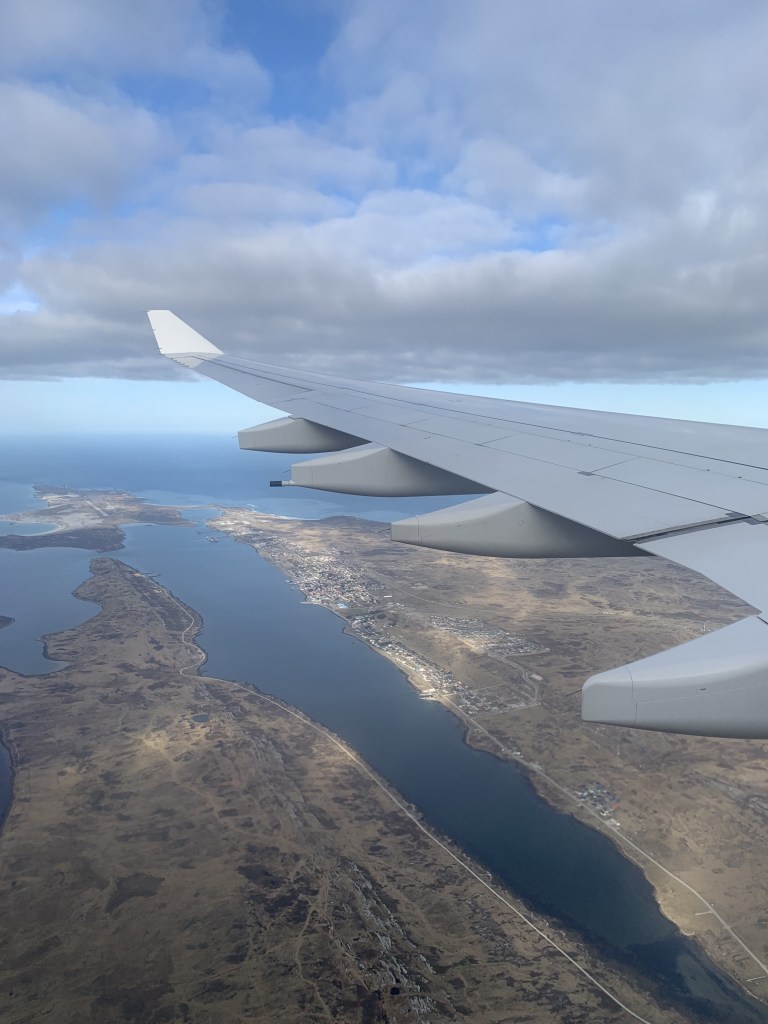
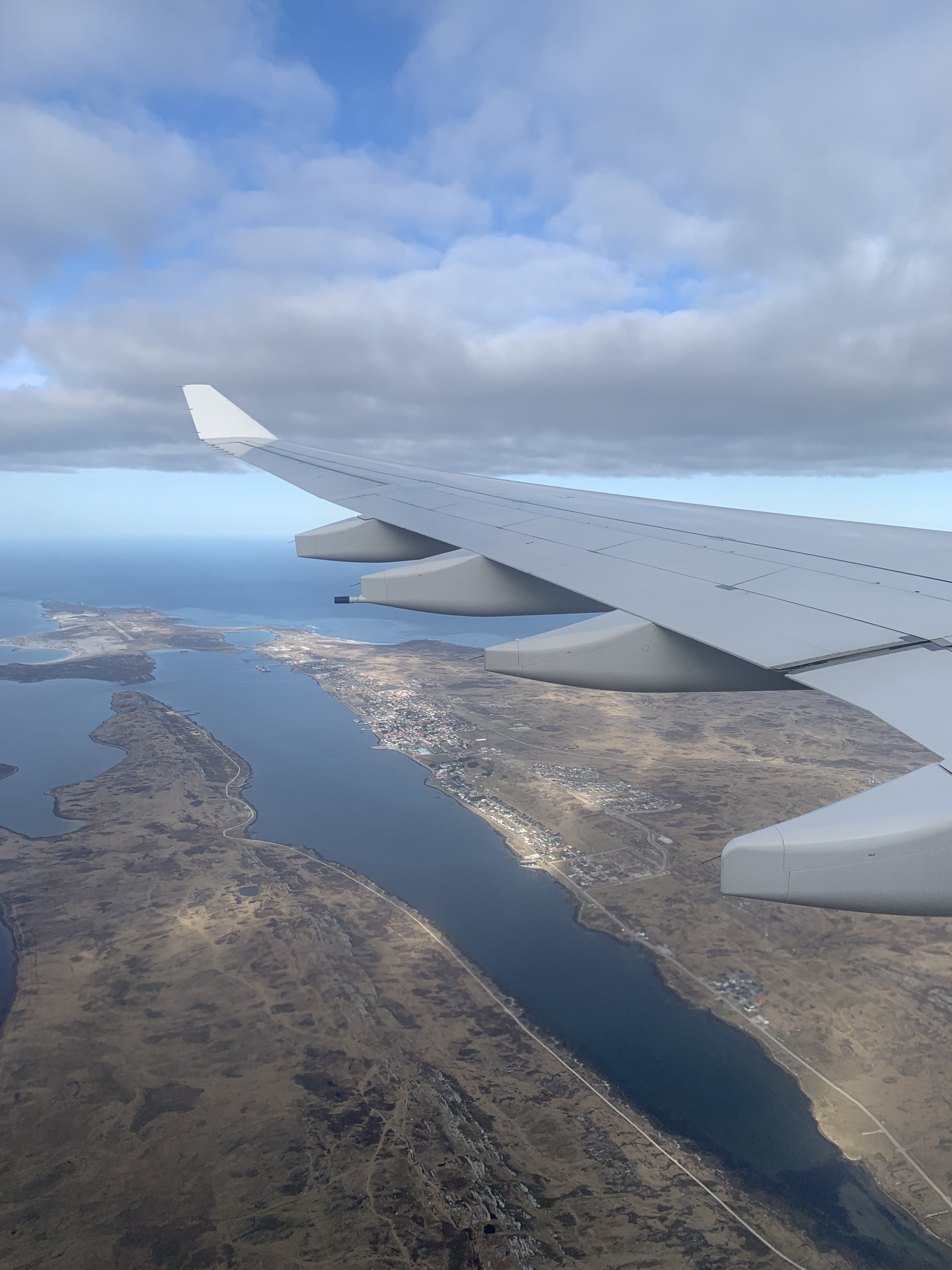
The city of Stanley is just under the wing…. We arrive at about 4pm Falklands time (BST -4 hours) and queue for our bags, which is a bit tight for space round the carousel but everyone is very polite and helpful. It takes a while for any of my bags to arrive, which is a bit nerve wracking as always. Those of us waiting a long time start to make little jokes about the wait. We all have a lot of luggage, as anyone living or working in the Falklands is allowed 55kg which translates for me into 1 very large suitcase, 1 regular and 1 small, plus my carry on luggage. I manhandle it all onto a trolley for the short distance outside, where I am kindly met by Marie, my predecessor at work and Lucille, the Education Department’s PA – local expert and fixer.
They drive me to my new house (which they’ve already checked) and show me key things – the heating, cooker etc. There’s a starter box of food in the fridge and a lasagne in the fridge – I’m all good to go.
And having made sure I’m fine, they leave me in peace for the evening.
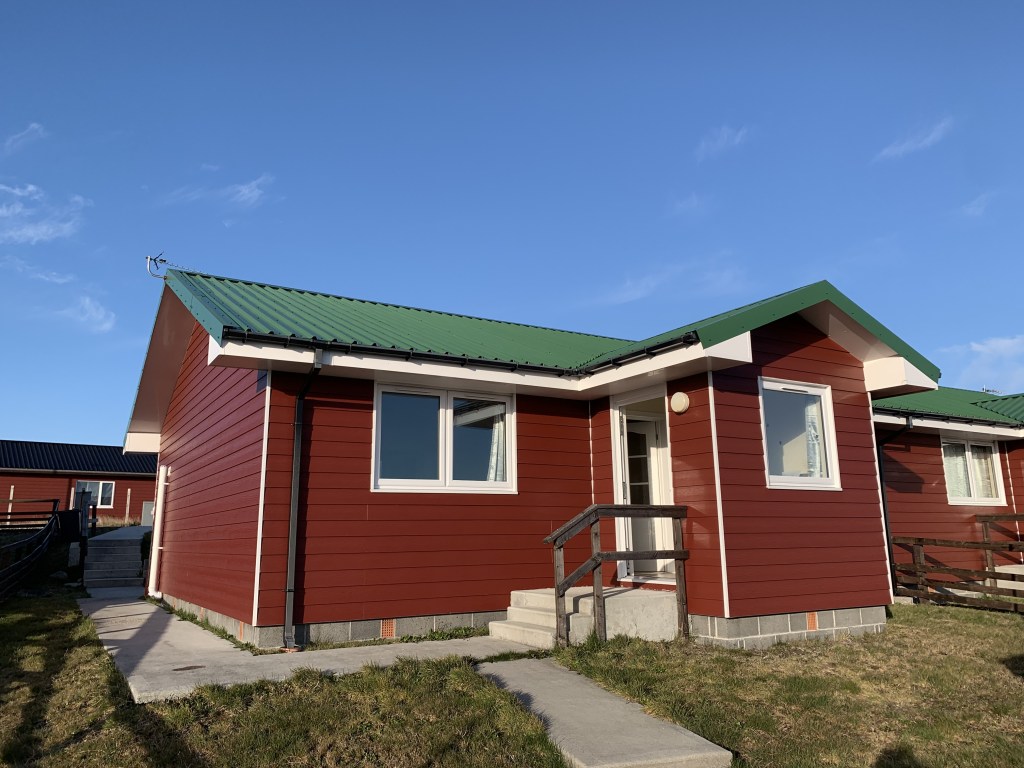
My new home -
On your marks…
As you know, in September 2022 I am moving to the Falkland Islands to take up the post of Director of Education for the next four years.
Working in the Falkland Islands has been a long held ambition of mine, since visiting twice whilst I worked for Chichester College. After 9 fulfilling years at City College Southampton as its Principal, I was astonished to see the post of Director of Education in the Falkland Islands advertised just as I’d decided to start looking for a new role. I applied and was delighted to be appointed..
And now today is the day (well very early Monday am) I fly down to Stanley to start. My house is packed up, I’ve had a major declutter and I’ve shipped those things I can’t live without. I’ve said goodbye and promised to keep in touch while I’m in the South.
So, this blog will be a way of sharing with you life in the Falklands and the South Atlantic every now and then. Keep watching!

-
Subscribe
Subscribed
Already have a WordPress.com account? Log in now.
 Where is Sarah?