-
Weekend Life
One thing I have adapted to in the Falklands is how planning for the weekend works. In the UK my weekends would often be booked up or have events in it months in advance. Arranging to see friends needed diaries and lengthy consultation about possible free dates.
When I arrived here I needed to adjust to the fact that this just doesn’t happen here, people do not fill up their diaries for weeks to come. To start with this made me anxious – what if there was nothing to do? What if there was something brilliant to do and I couldn’t go because I didn’t know about it and hadn’t planned for it.
Gradually I have adjusted and relaxed. The Penguin News (our weekly newspaper) publishes What’s On and the most advance notice of anything is about a month. It’s also true that many key events happen at the same time every year and you are expected to remember when they are. So I now know the Conservation Ball is always in mid September, the Christmas Races are when you’d expect, Sports Week is in February. The other thing I’ve learnt is that new things crop up all the time, about a week to a few days in advance – so there’s always something to do.
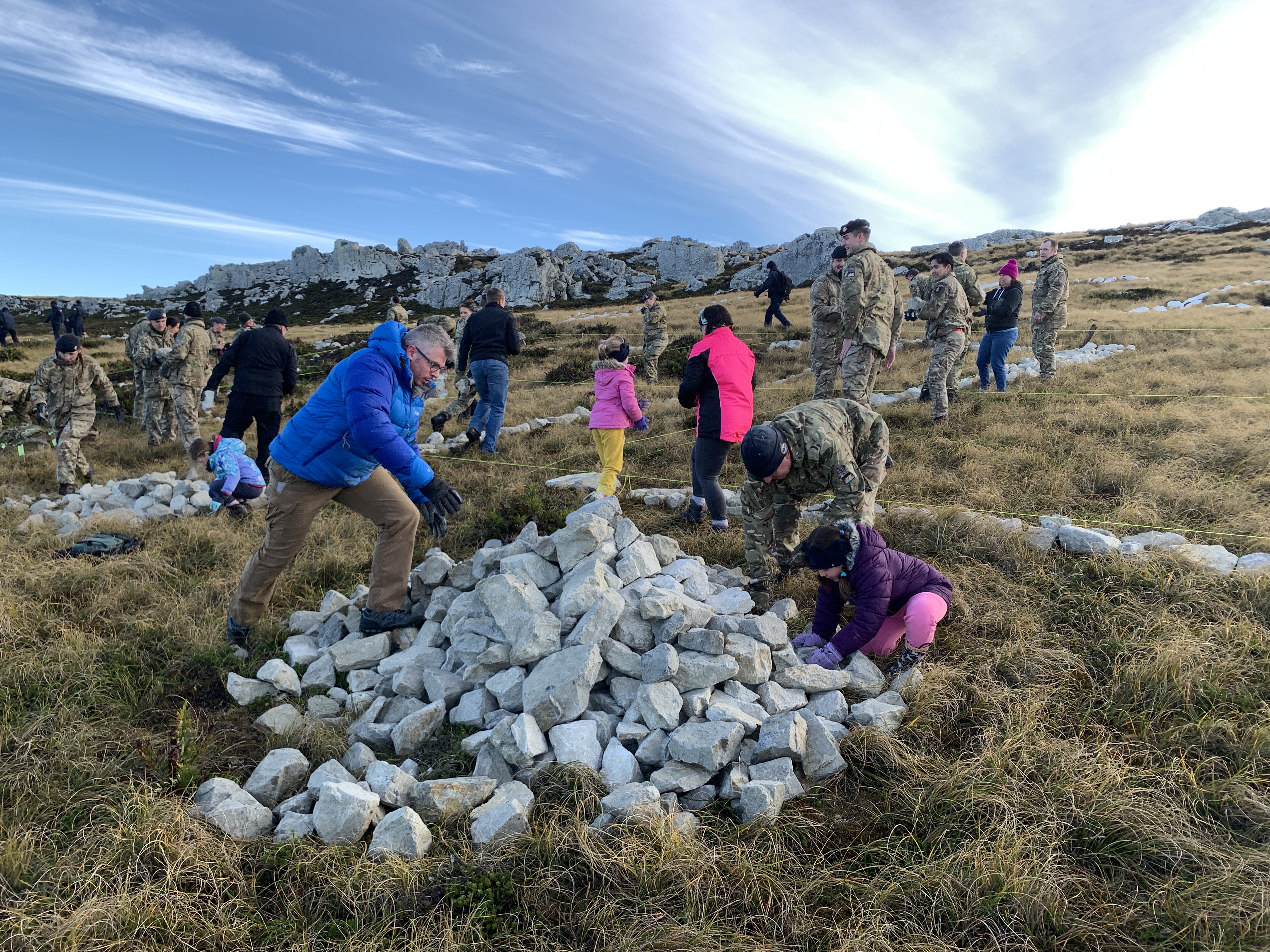
Fancy spelling a naval ship’s name in stones on the side of hill? It’s a tradition to remember the ships that have been stationed here. That was one of the activities for the King’s Coronation – when a group of volunteers and military laid out the Leeds Castle’s name on the Camber Penisula. The quarry provided the stones – which were surprisingly large and heavy. We heaved them up the hill and laid out the letters and they were painted. The sun shone, there were lots of willing hands and strong people for the big stones and it was done in a few hours.
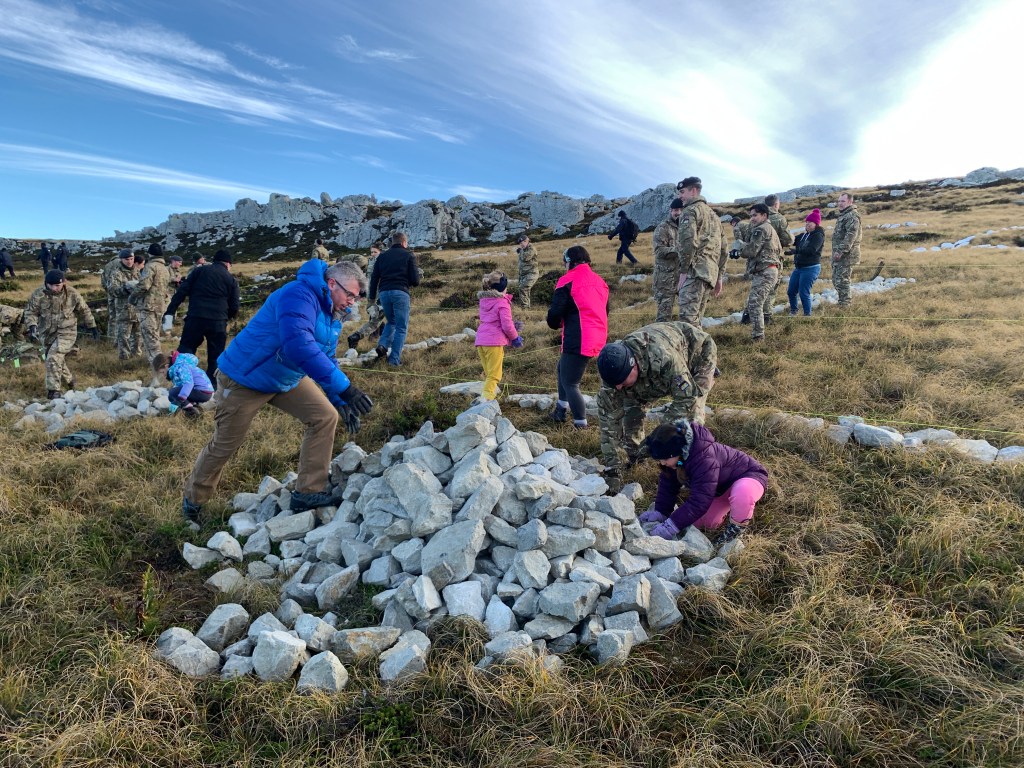
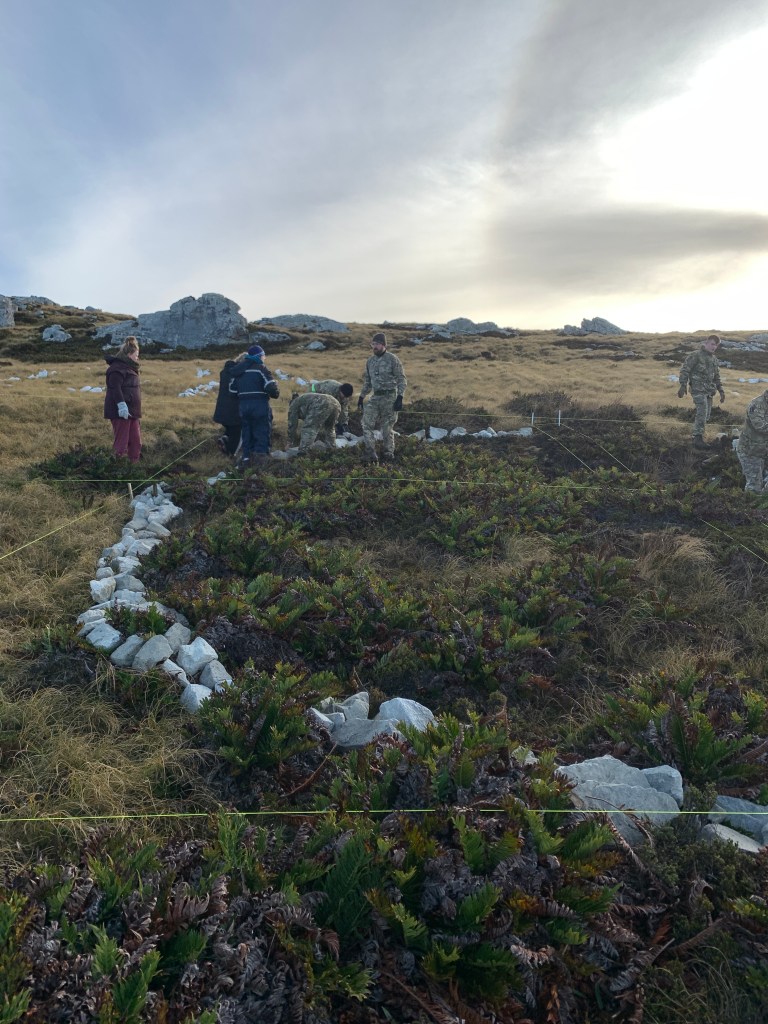
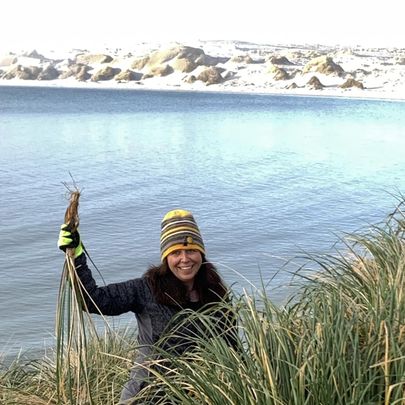
Or perhaps you’d like to make a contribution to the environment? Then why not get involved with Tussac grass planting. There’s an ongoing effort to replant Tussac in coastal areas, where it should be and where it supports nesting birds and a variety of animals. In some places it’s disappeared due to 150+ years of commercial grazing, but now it’s being given a helping hand to recover. So one summer weekend, a varied group of volunteers learned how to do this. An expert showed us how to get “tillers” (small tussock plants) out of a main plant – inevitably he made it look easy.
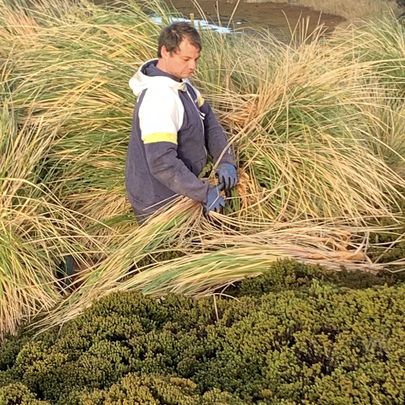
We then had a go and were delighted when we managed to pull out a tiller, as we were fairly inept beginners.
And then we planted
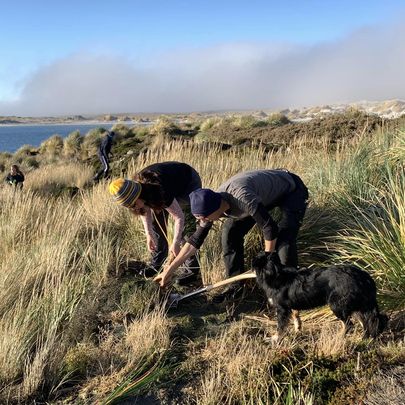
And the good news is that a few months on, they seem generally to be thriving and growing.
And as well as these one off activities, you are spoilt for choice for sport (a weekly Park Run, football, rugby practice, ice hockey (not on ice), to name a few); or walks in the hills; or visiting outer islands; going to see wildlife and much more.
So a year in, I know not to over plan my weekends, to see what comes up and to enjoy it.
-
The power of Facebook
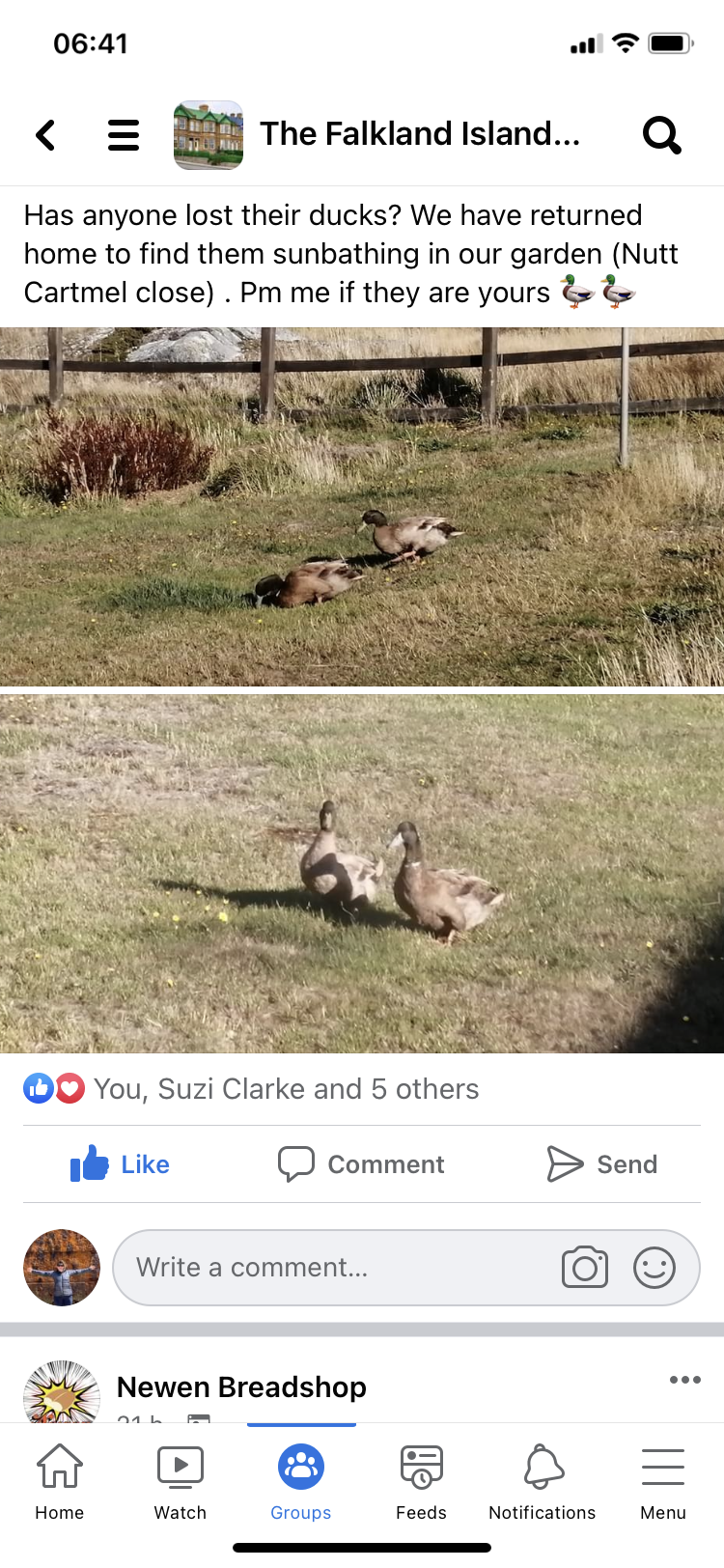
One thing you quickly learn living in the Falkland Islands is that Facebook is an integral part of everyday life. This came as a bit of a surprise to me, as before leaving the UK I was on the verge of not using it, as only few people I knew were posting regularly. It’s very different here!
What makes Facebook particularly useful, is the use of groups as a way to communicate what’s going on. There are Facebook groups for everything.
The Falkland Islands Community Board – effectively a noticeboard for: events, the cinema schedule, plane arrivals and departures – both FIGAS and international, various public service announcements, asking questions, seeking advice, reuniting lost dogs, cats and poultry with their owners…
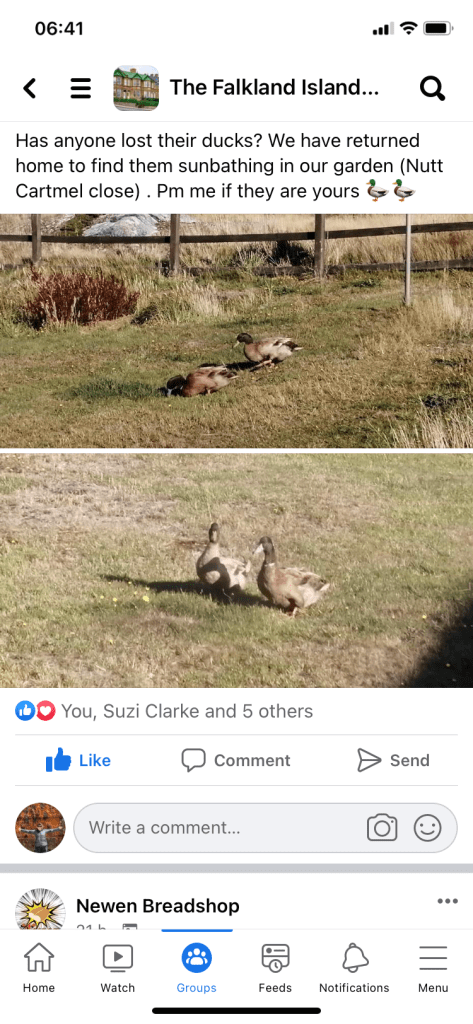
Falkland Islands Community Board – yes, this is a different board; no, I don’t know what the reason for two boards is; yes, almost everything is posted on both boards – but not everything, so you need to belong to both
FI Election – periodically in use for general elections and by-elections
FI Bring and Buy (or chebay) and Falklands Buy and Sell- where anything surplus to requirements is advertised for sale. A fine source of kitchenware; clothes; shoes; books; house plants; car parts; cameras etc. etc. Last weekend I finally managed to buy a full length mirror, a picture frame and a lampshade – a purple patch of finding things I wanted and being in time to buy them, something I don’t often achieve.
FI Car Sales – the place to go to buy and sell your car.
And there are lots of special interest group pages, whatever your interest, including:
- FI Museum and National Trust
- FI Yacht Club
- FI Gardening
- Wild Falklands – stunning images of wildlife
- and lots and lots of sports and clubs
To be honest it’s hard to think of something that doesn’t have a group or a Facebook page – I wonder if Mark Zukerberg ever imagined it being used like this by a whole community when he set it up. It also makes me wonder if other Islands or small communities use Facebook in the same way, or is it a uniquely Falklands thing?
-
Island Communication
Throughout the inhabited life of the Falklands, keeping up with the news and with your neighbours has been done in many ways and has followed technological developments in the rest of the world. However challenges including distance; the lack of an undersea cable to connect us to fast Internet (the obvious place to connect to would be Argentina, so don’t hold your breath); communicating to dispersed farms and settlements; means that communications still have their own unique flavour.
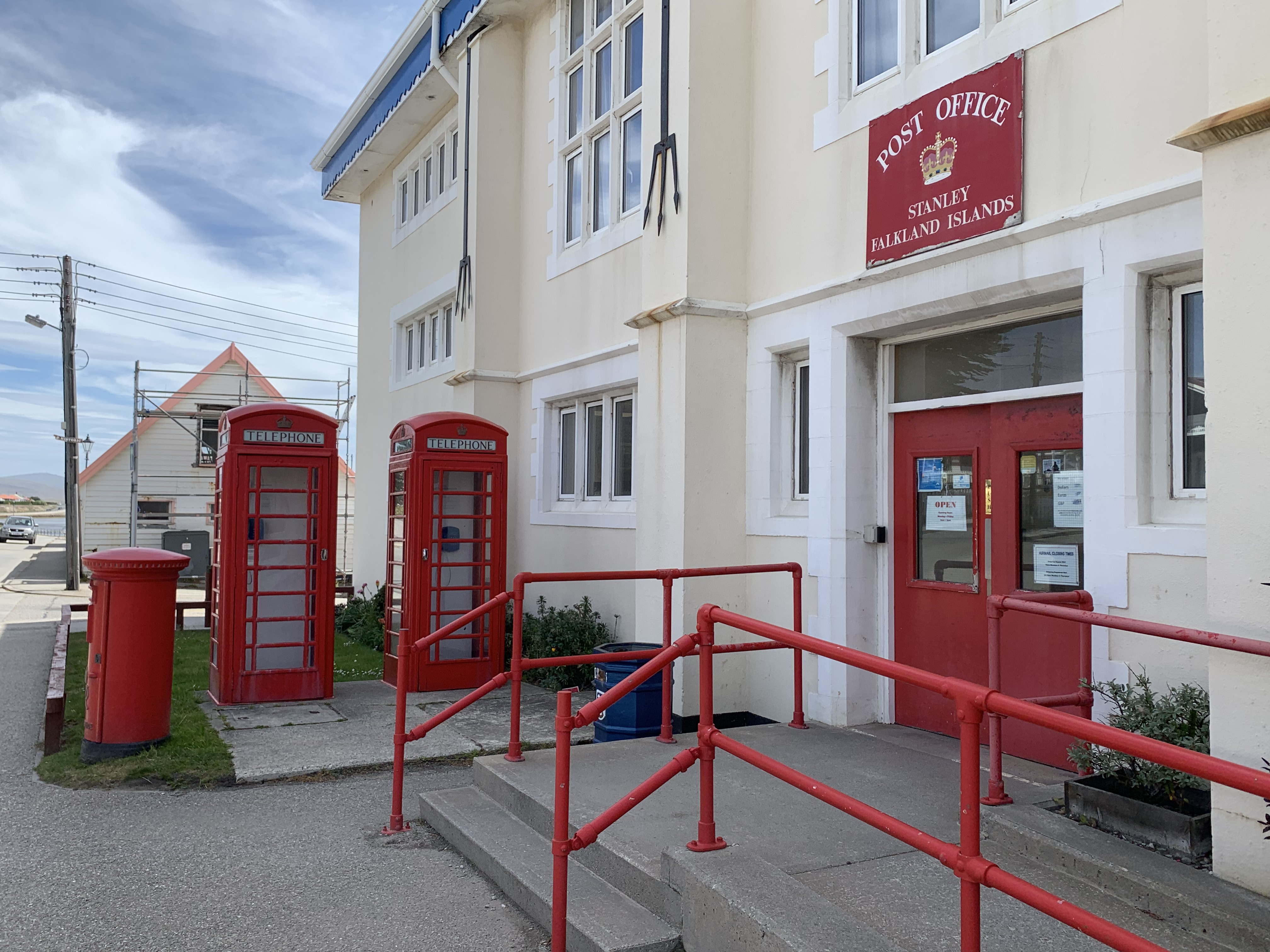
There is a postal service – it receives and send external mail from the UK on the Airbridge; it sorts internal Falklands mail; it distributes post to Camp with FIGAS; in Stanley it keeps your post in a PO box until you come and collect it, when you remember. In fact many people have their post delivered to their employer’s PO Box, rather than having one of their own.
There are landlines and a mobile phone network, but you can quickly lose signal. As a result there is a 2 meter VHF radio network in use across the Islands and it is sufficiently important that there was major investment in it as recently as 2021. These days it’s not used for doctor’s appointments and nor do children have their GCSE results read out for the whole network to hear, but it is still an important communication link.
The Islands are connected to the Internet and have been for many years but it is via satellite, so it is slow and expensive. It’s faster than it was the first time I came but it’s much slower than normal. Also there’s no such thing as an unlimited data package here, every byte of data has to be paid for, which really concentrates the mind on what you want to use it for.
However, the Internet exists and the communication it enables still feels like a marvel to me. When I was growing up and my father was away with the Royal Navy, the communication method of choice was letters and postcards which took weeks to arrive. When I travelled in Peru in the mid 2000s – I could email from an Internet cafe or on special occasions I could find an international phone shop and make an expensive call home. Now I can use any number of devices and apps to call friends and family, as if they were only a short distance away. I wonder what’s next?
-
A winter weekend
A mid-winter weekend break at Pebble Island was agreed on to make a change of scene, although we weren’t really sure what to expect. The lodge at Pebble Island (like all the tourist lodges) is shut for the winter, but Dot and Alex Gould who own and farm Pebble, have two houses available for visitors. It seemed like a good opportunity to explore a bit and get away. Plus you can choose to eat with Dot and Alex in their farmhouse, which we had heard very good things about and to add to that Anita, who also lives there, offers beauty treatments.
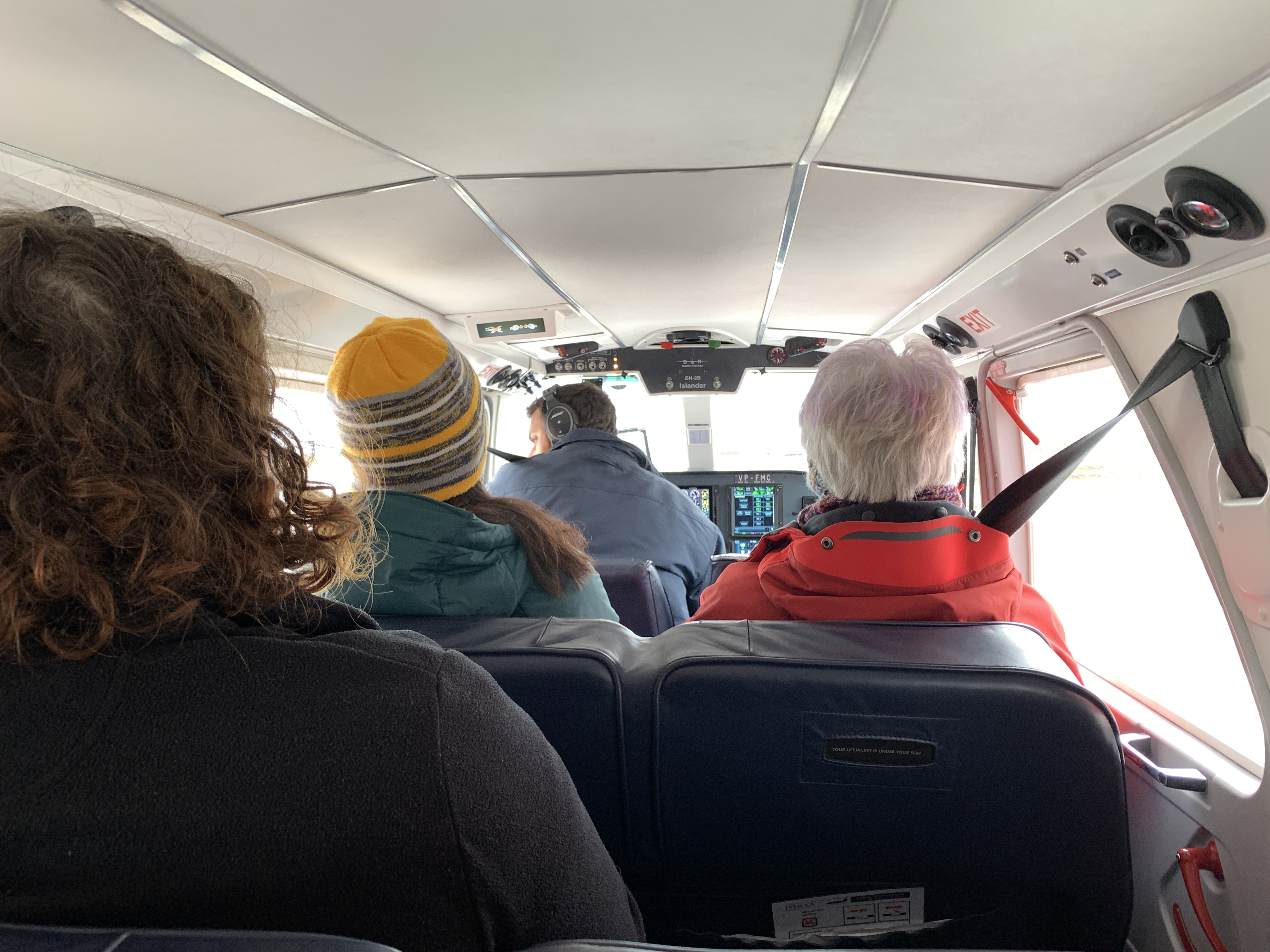
Time for a FIGAS flight. As it’s winter, at Pebble this means landing on the very long Elephant Beach, rather than their airstrip which gets very wet and is saved for the summer. This also means that landing is dependent on low tide and on clear, flat stretches of beach and not ridged sand or lots of seaweed or lots of birds foraging in the seaweed. As we set off from Stanley, Dion our pilot, said he thought we’d probably be able to land!
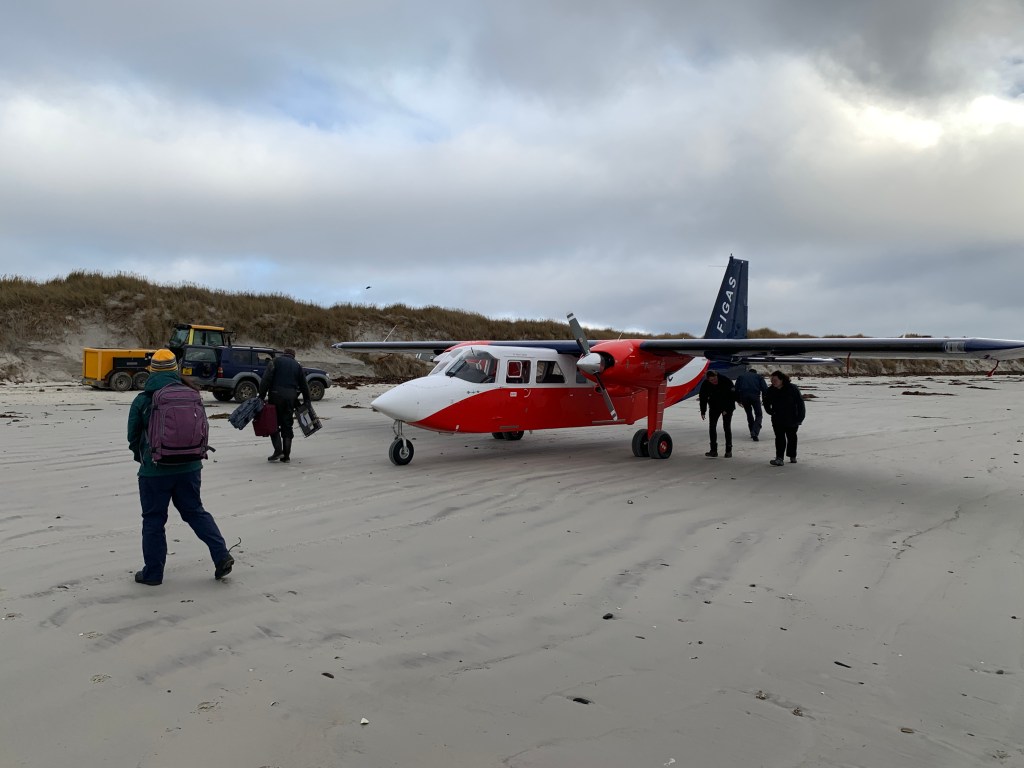
We landed safe and sound on the beach and taxied to the break in the dunes where Dot and Alex were waiting for us. After the passengers, luggage and post were handed over, the plane taxied back down the beach and then took off into the wind for the 45 minutes back to Stanley.
We had a very enjoyable couple of days at Pebble, it was cold but dryish (some light snow overnight) and we spent Saturday looking for pebbles on a beach (pretty and unusual pebbles are what the island is named for). On one of the ponds we saw some black necked swans for the first time and on the beaches lots of gulls, plovers, steamer ducks and oystercatchers. Elephant Beach (where we’d landed) is 4 miles long and we walked all of it.
On Sunday there was time for some beauty treatments and to be given a demonstration of how to hand shear a sheep (rather than the usual machine shearing) and in the afternoon it was time for the plane back to Stanley. This time the beach nearest the settlement was covered in seaweed and things that were probably urchins and were providing a feast for seabirds.
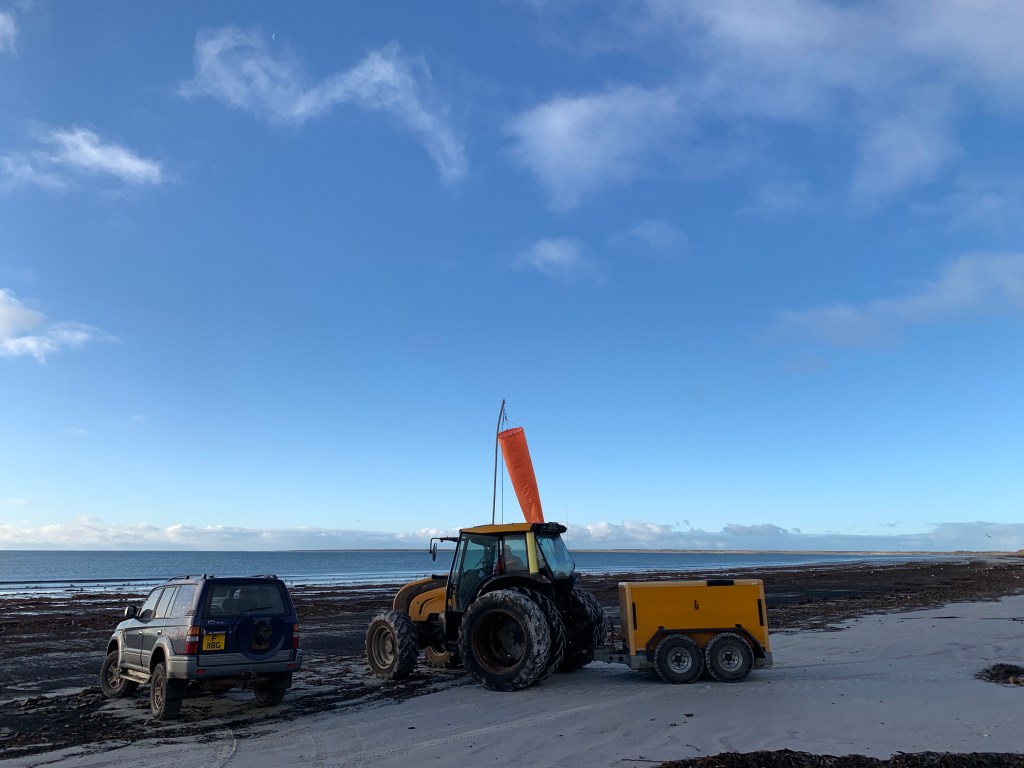
Amazing how a couple of tides can transform the beach. Fortunately Andrew, who was flying us back, was able to use the far end of the beach to land, were it was nice and clean.
The flight back was really special. Andrew flew parallel with the coast but deliberately stayed a bit offshore because he thought we might see whales – and he was right. We saw 3 or 4 small groups of Southern Right Whales along the coast and as we were the only flight of the day, Andrew took the time to give us a fantastic view, circling round a couple of the groups several times. It was very exciting to see the whales going about their daily routine – which at this time of year is apparently most likely to be socialising or mating. As well as it being exciting for passengers to see, the FIGAS pilots report their sightings to the conservation charities based on the Falkland Islands and are a good source of information, they keep a regular eye out for marine wildlife while flying.
And then back to Stanley, having had a very pleasant, relaxing weekend having explored only a little of what Pebble Island has to offer, I’ll definitely be back.
-
A night out
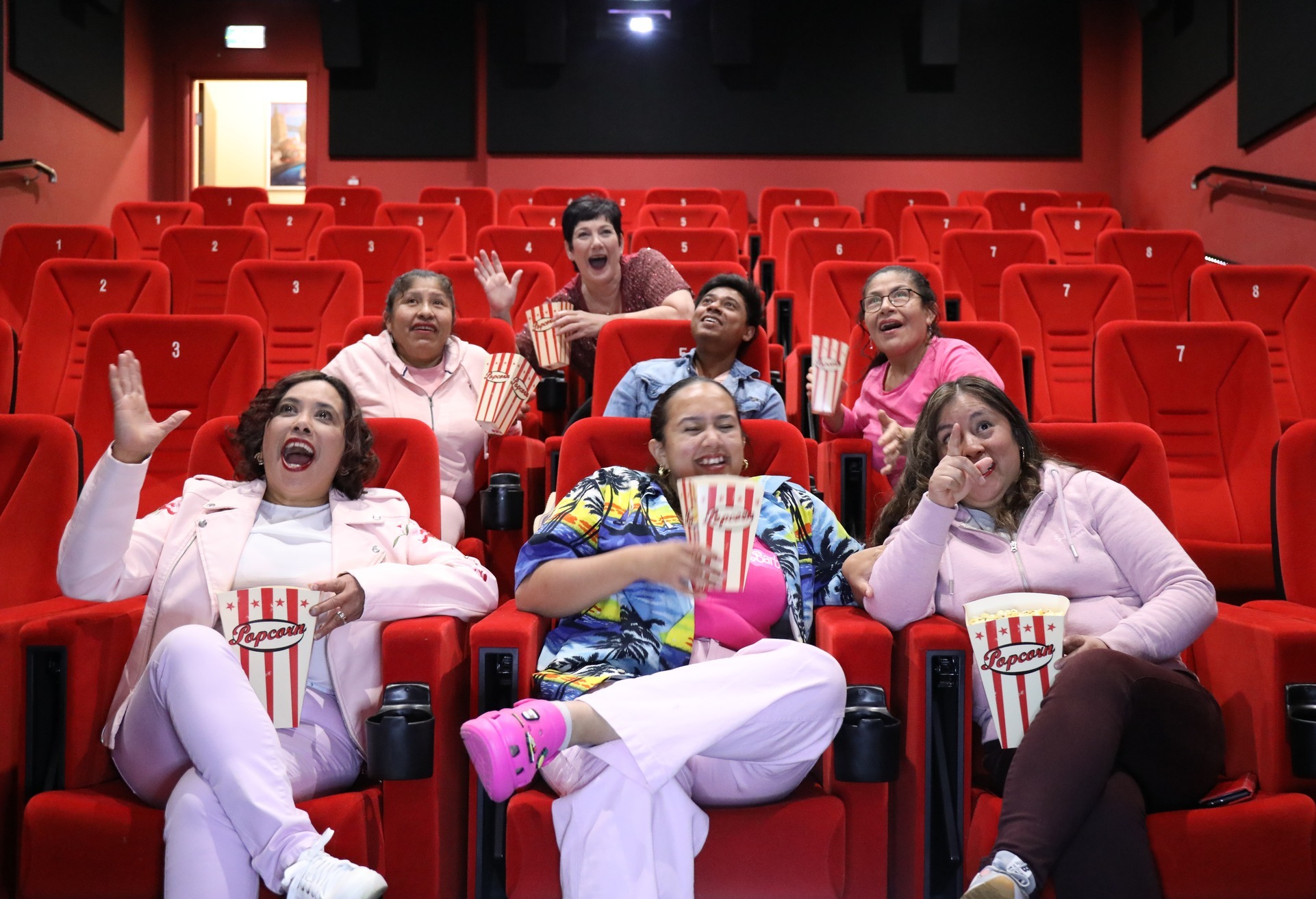
The weekend is coming and you feel like a night out – what can you do?
Pretty much every weekend you can go to the cinema and what a very lovely cinema it is too – the Harbourlights cinema at the Malvina House Hotel. Yes, Southampton readers, the cinema here has exactly the same name as the cinema in Ocean Village, Southampton – I have travelled 8,000 miles to go to a cinema with the same name!
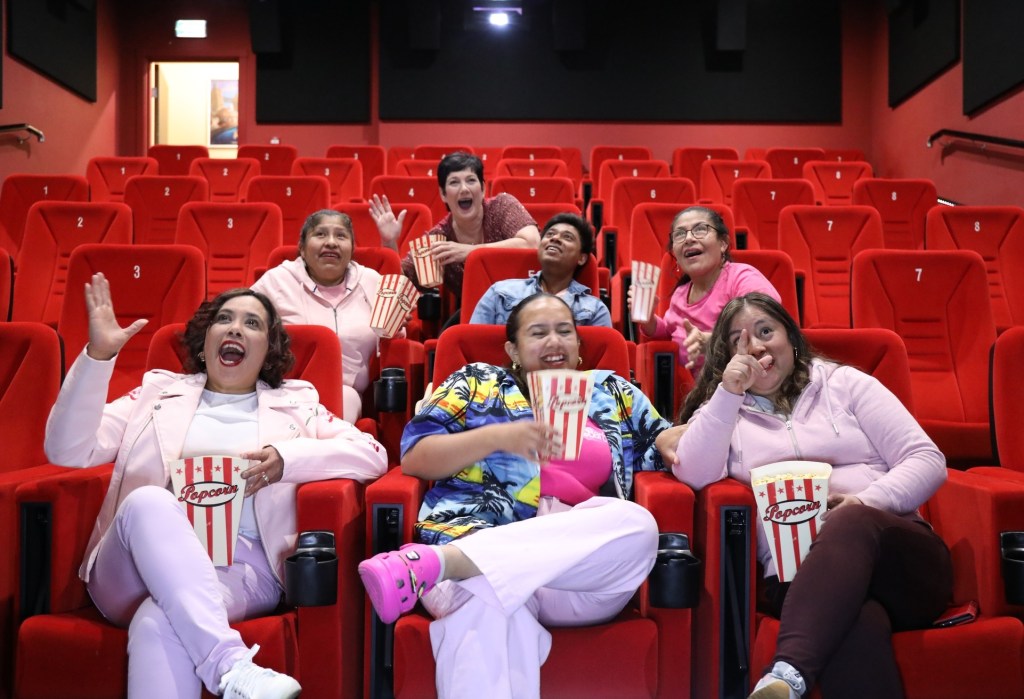
Photo: Harbourlights Cinema – getting ready for Barbie There are several pubs in Stanley but for a craft beer experience, there is Beerworks. This is Stanley’s very own micro-brewery, where owner Jeff brews up a selection of ales with great tastes and names, such as Rockhopper (a blond ale) and Peat Cutter (a stout). Beerworks is truely a micro-brewery, so it’s only open a weekend each fortnight to give Jeff enough time to brew enough ale in between openings. There’s a very nice taproom and in the summer lots of room outside and sometimes Rhys’ food truck or bbq is on hand as well.
For a night out with live music, there is the Trough which hosts local bands, mainly of the rock and country variety. On the outside it’s an unassuming brown, one storey building – but go through the entrance and a red curtain and it’s transformed. A stage area at one end, tables round the edges and a dance floor in the middle. During the winter it averages out at about 1 event a month, and it’s great to hear live music and songs that I know!
Traditionally there were regular dances at the Town Hall in the centre of Stanley – these days there are fewer dances, but one that continues is the Camp Education Dance on the last Friday of Farmers Week in July. As it’s mid-winter it’s a good time for farmers to come into Stanley and spend time discussing issues, learning new skills and planning for the year ahead. It’s also a good time to socialise and enjoy yourself. The Camp Education team (teachers who teach in settlements and travel between farms) run the dance at the end of the week and this year I volunteered to help. It started at 9pm (I coped by having a coffee at 7pm to keep me awake all night!) and went on until 1am. Between us we took entry money, ran the bar and acted as bouncers on the door. The DJ played country music (more songs I know) and there was partner dancing all evening , with all ages mixing and dancing together – a really positive thing to see. It was a lovely evening and I even had a dance, when someone very kindly took me for a turn round the dance floor and I tried not to stand on his feet.
There are several formal events – such as the May Ball, the Falkland Islands Museum Ball, the Conservation Ball and in some years the Poppy Ball – but I haven’t been to any of these yet – so that’s a subject for future posts, as are Pub Quizzes, the Winter Quiz and Darts… For a small community there’s a lot going on!
-
In the bleak midwinter?
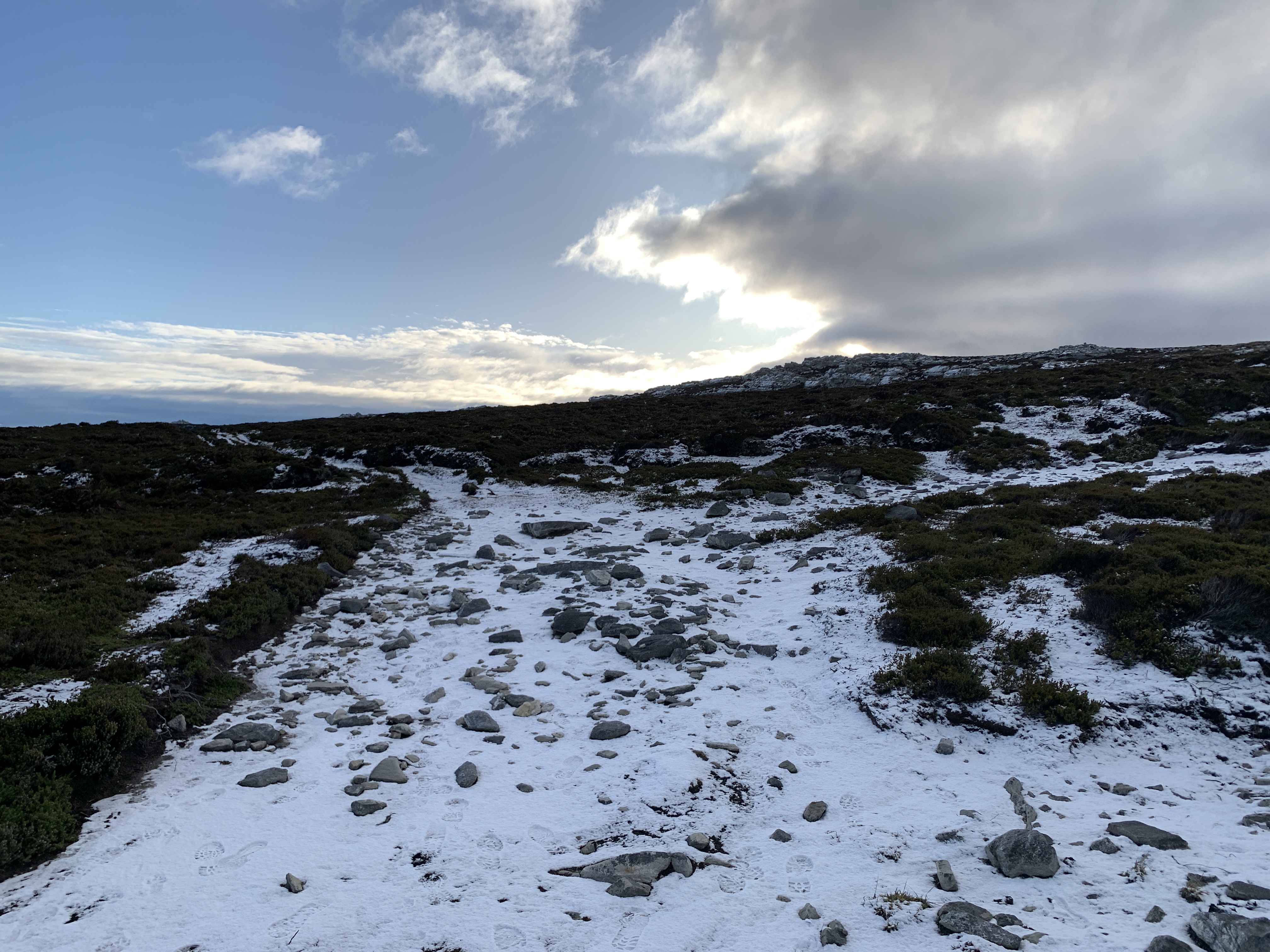
When I first arrived, one thing that struck me was how much people talked about the winter with a sense of dread – so I wondered what would I think about it.
In the middle of July, we’re well past the winter solstice and the days are slowly, very slowly lengthening and I think it’s time to say…. I like winter here!
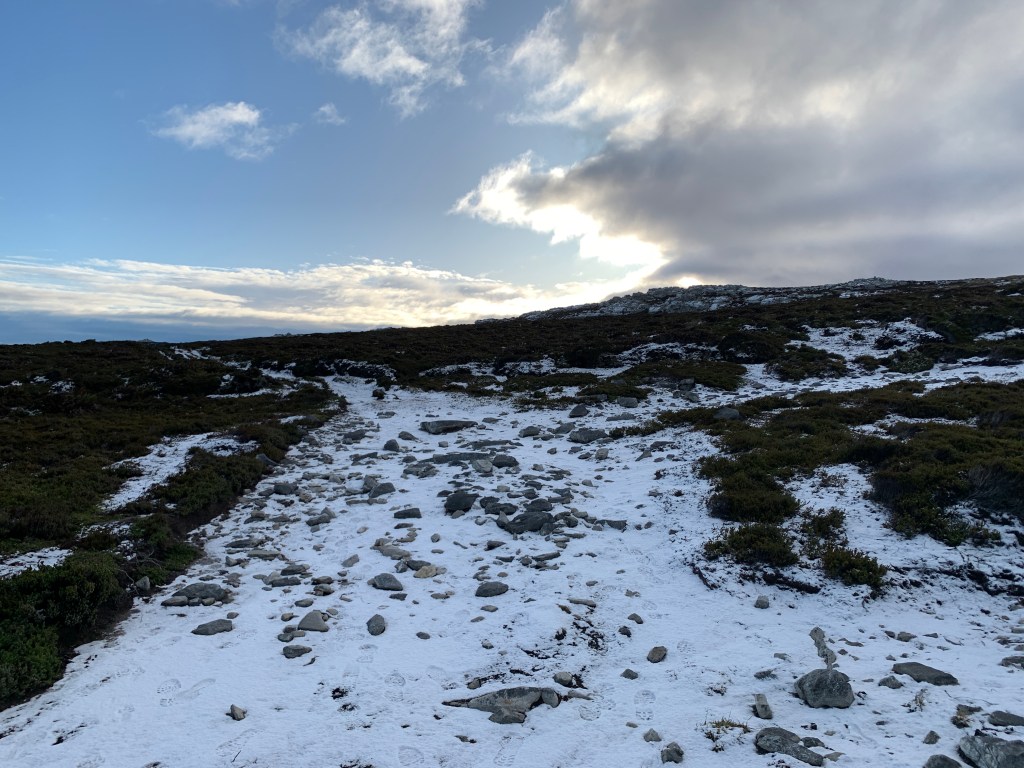
The good bits for me are:
- bright and brisk days – it’s currently hovering around 3 degrees in the day and a bit below 0 at night. Cold enough to wrap up when you’re outside and feel energised; (not close to bone chilling, hurts when you breathe Canadian cold)
- leaving work and it’s still light at 5pm
- seeing the sunrises and sunsets – because I’m awake to see them!
- it’s calm – not all the time, but regularly. The wind is much less intrusive in June and July – we’ll see about August
- snow, which makes things pretty and everyone just carries on, nothing closes (having lots of 4WDs helps)
- having a good reason to wear my furry French snow boots regularly!
- no endless discussions about whether to close schools or not (this makes me very happy)
- walking in frosty, snowy conditions with beautiful light and the ground crunching under your feet
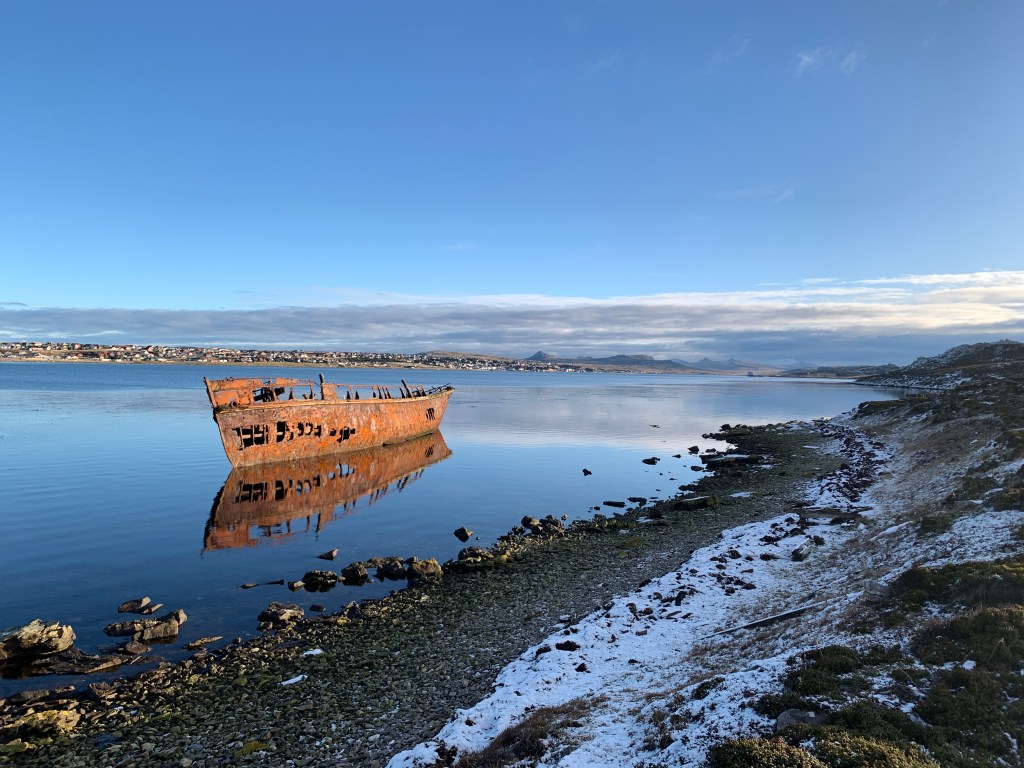
However, there are things that are a bit of a pain:
- It does feel very dark in the mornings compared to southern England. We start work at 8am and in the middle of June it is completely dark until sunrise at 8:59, it has slightly improved now to 8:48! It’s quite hard to get going in the mornings – I know it’s the payoff for lighter afternoons but still…
- Snow is lovely but ice is horrid. When it’s wet and cold, its gets icy quickly and it can take you by surprise, especially on smooth concrete paths – a surface to beware of.
- Deicing the car every morning for 10 minutes or so, and sometimes having to clear the windscreen every time I get into it during the day.
- The price of fresh fruit and vegetables are now astonishing – however the freezer section is very helpful. I’ve learnt that frozen, pre-sliced onions are a thing and they cook very well in all the things I’ve needed onions for so far.
I suspect that modern winter here is much, much easier than it was – as we move from well-insulated, heated house, to vehicle to heated office. It must have been a much bleaker experience in the days of horses for transport and peat fires – which is well within living memory.
On balance though, my verdict is I like winter here.
-
A Tale of Two Cities – Santa Cruz de la Sierra
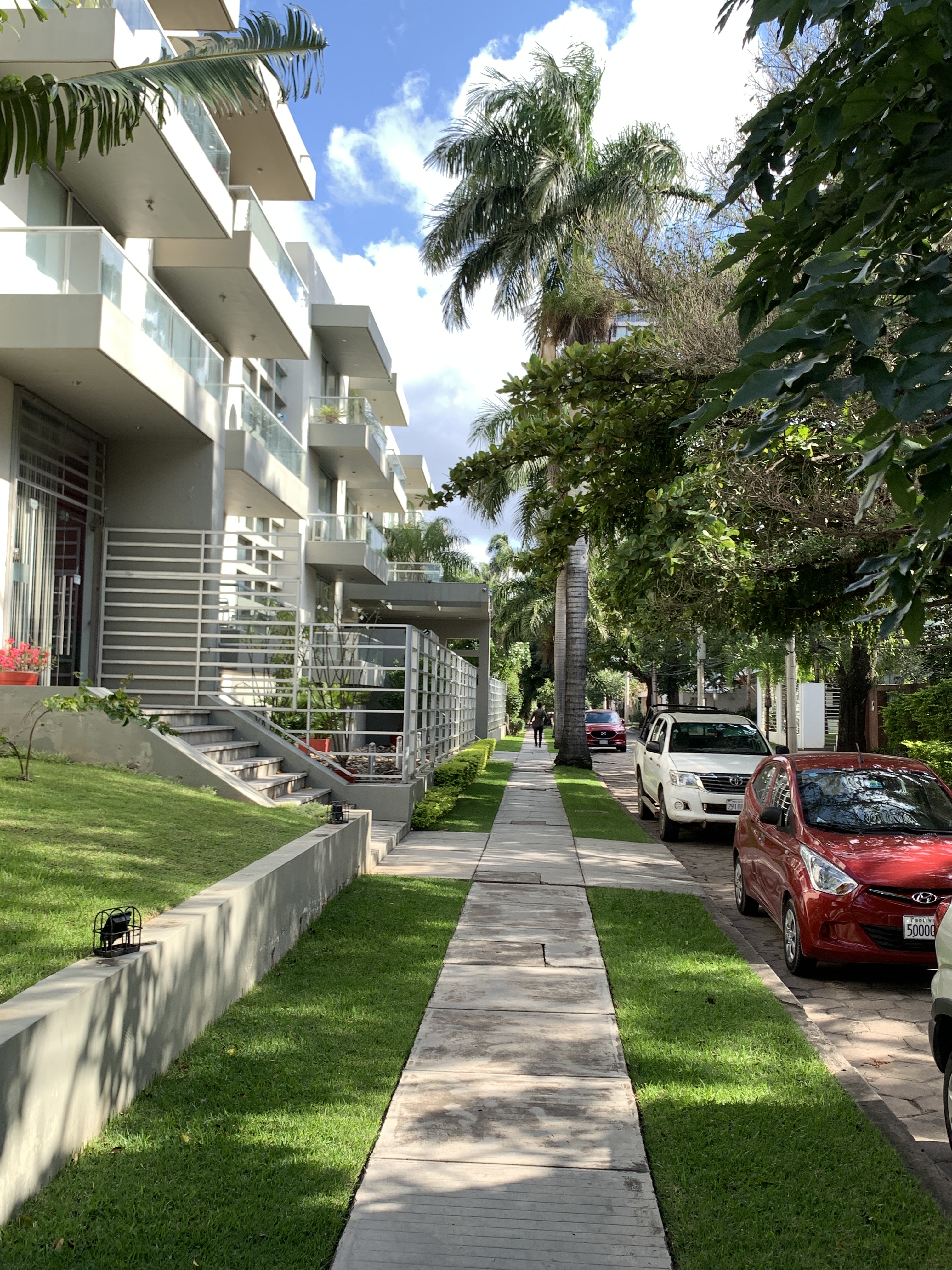
The start of my Bolivian trip is in Santa Cruz de la Sierra. What images spring to mind of Bolivia? High Andes, women in huge wide skirts with beautiful embroidery, llamas, salt flats? Is it this?

Or this?
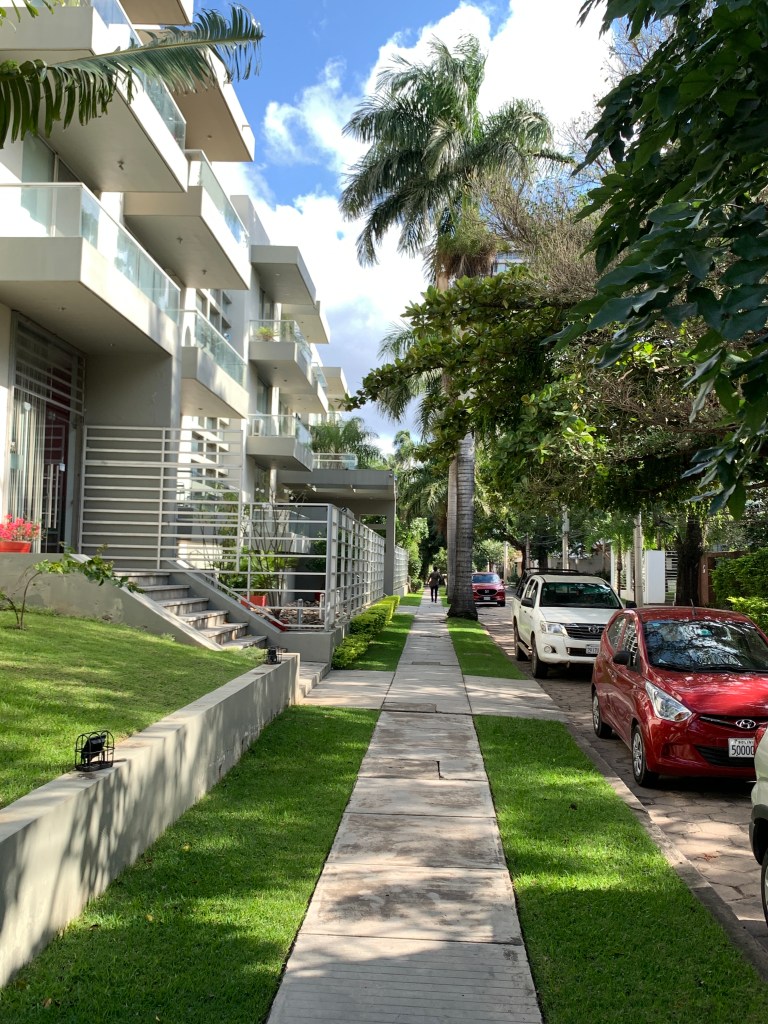
Yes this is Bolivia too – welcome to the Equipetrol district and to Santa Cruz, the biggest city in Bolivia (3 million people out of a country of 11 million) and at the foot of the Andes and the edge of the Amazon basin.
Having arrived in the horrid early hours of Friday morning, after a brutal flight which took off at 1am and landed at 4, I’d got some sleep in the hotel and then staggered out into the humid air to clear my head. I quickly found that I was walking around with a permanently dropped jaw as I walked through luxury shopping and residential areas. There are some very lovely streets indeed, made of up big houses and luxury apartments.

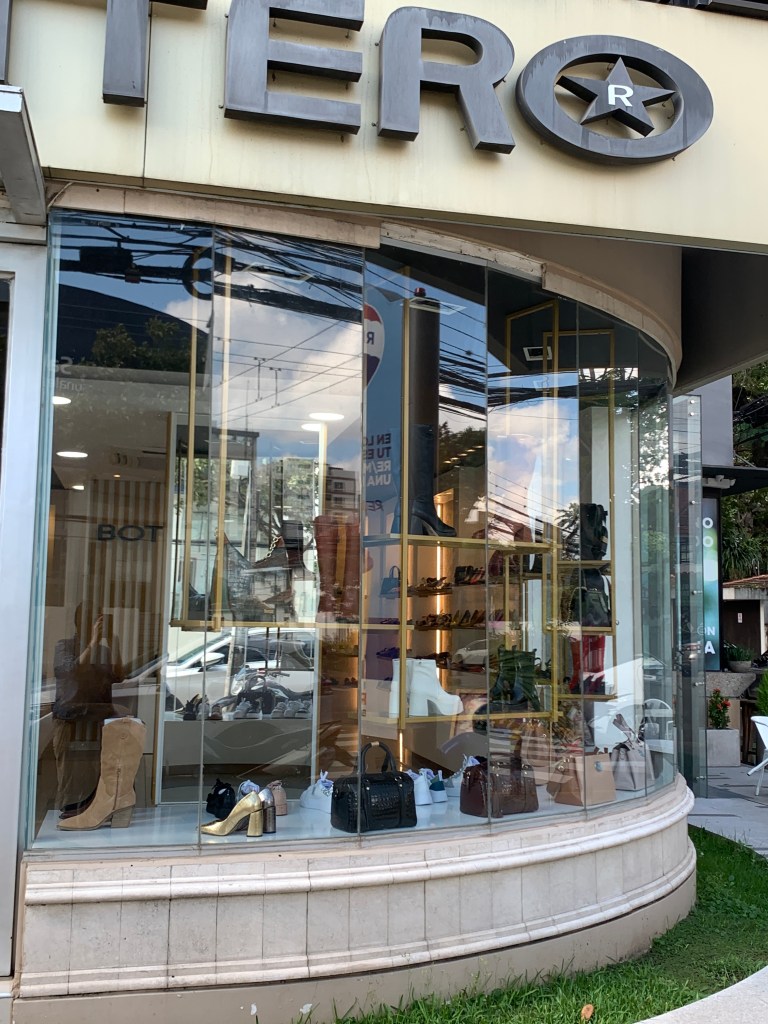
There are also astonishingly expensive shops and restaurants to choose from. I gave way to an elegant woman leaving a shop (that sells Cartier) who looked like she was about to go to lunch in Cannes. I passed women walking down the street with open handbags, that any able pickpocket could have helped themselves from. I walked with people who had expensive headphones on, their phones out and were reading or looking at maps without a care in the world. These people were not worried about crime.
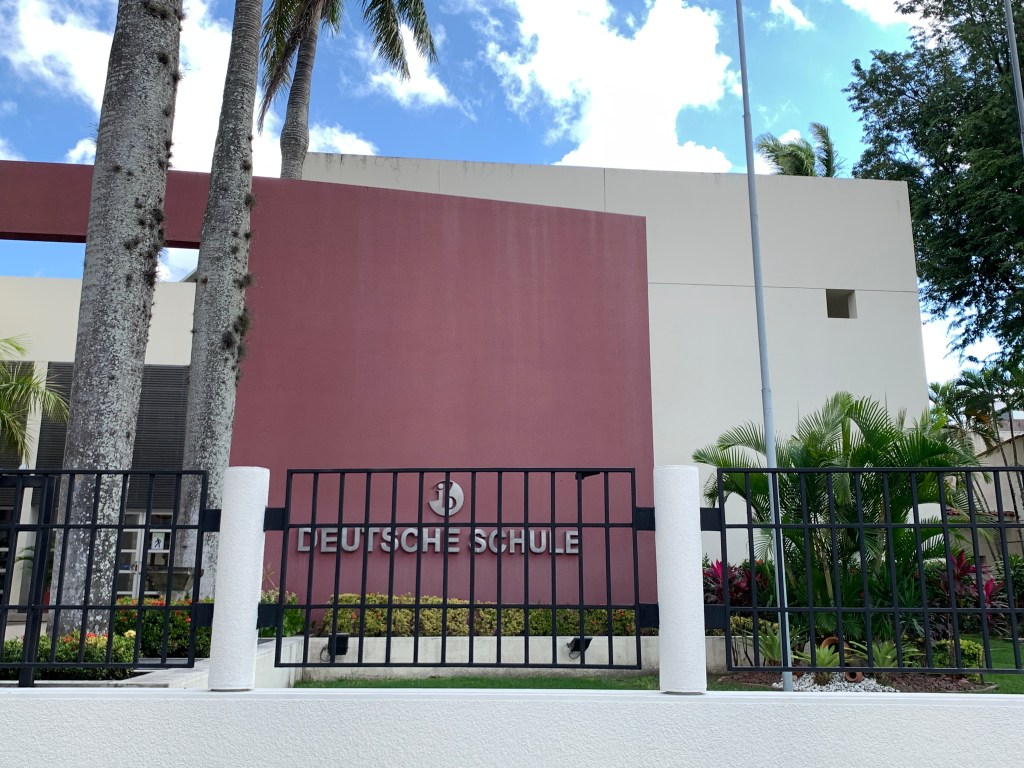
And I passed grand university buildings and exclusive private schools – and learnt that there are strong German connections to Bolivia, so just like there are British private schools in many South American countries, in Bolivia there are German ones.
It has to be said that this is not what I was expecting and from a bit of quick reading, it is clearly not typical of the whole country. This is a very wealthy part of Bolivia, which is a poor country – so I expect to see some very different places. However, after Santiago and being surprised at how it is at the moment, Santa Cruz is also a complete surprise, a contrast and a nice place to be.
-
A Tale of Two Cities – Santiago de Chile
Last weekend I travelled to Santiago, on my way to Bolivia, for a two week tour here. Due to flight schedules I needed to leave the Falklands a week early to get to the start of the tour. A good thing, as it turned out, the weekly Latam flight was delayed 24 hours and left on Sunday instead of Saturday. I was remarkably calm (once I knew I was definitely on the revised flight) as it just meant I had 4 days in Santiago rather than 5.
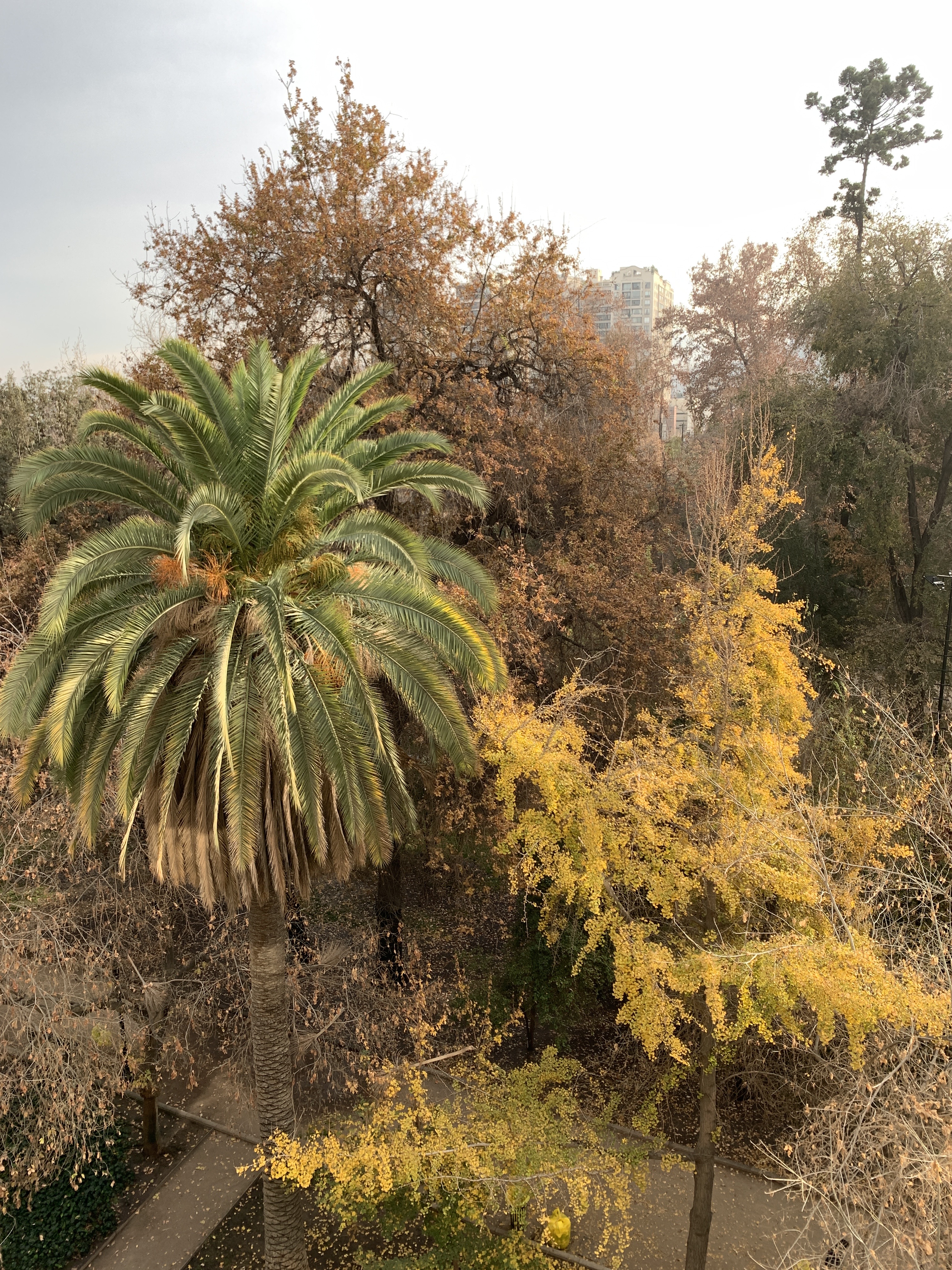
I was looking forward to spending some time in Santiago, as previously I’ve only ever travelled through it and haven’t explored at all. I stayed fairly centrally in Lastarria in a hotel on the edge of a lovely park. Even though it is winter and the trees are in autumnal colour, I loved being able to gaze at them all the time I was in my room. Who knew that trees are so entrancing?

The park provided plenty of entertainment as the Santiaguinos take their array of dogs for regular walks. As it was winter, I was walking round without a jacket and the dogs and their owners were in their winter coats. The dogs are clearly much loved and were generally of the slightly scruffy mongrel variety but still had their best outdoor outfits on. Apparently in the past there were a lot of street dogs in Santiago, who were cared for by local people – perhaps it has gone one step further and the dogs have been adopted.
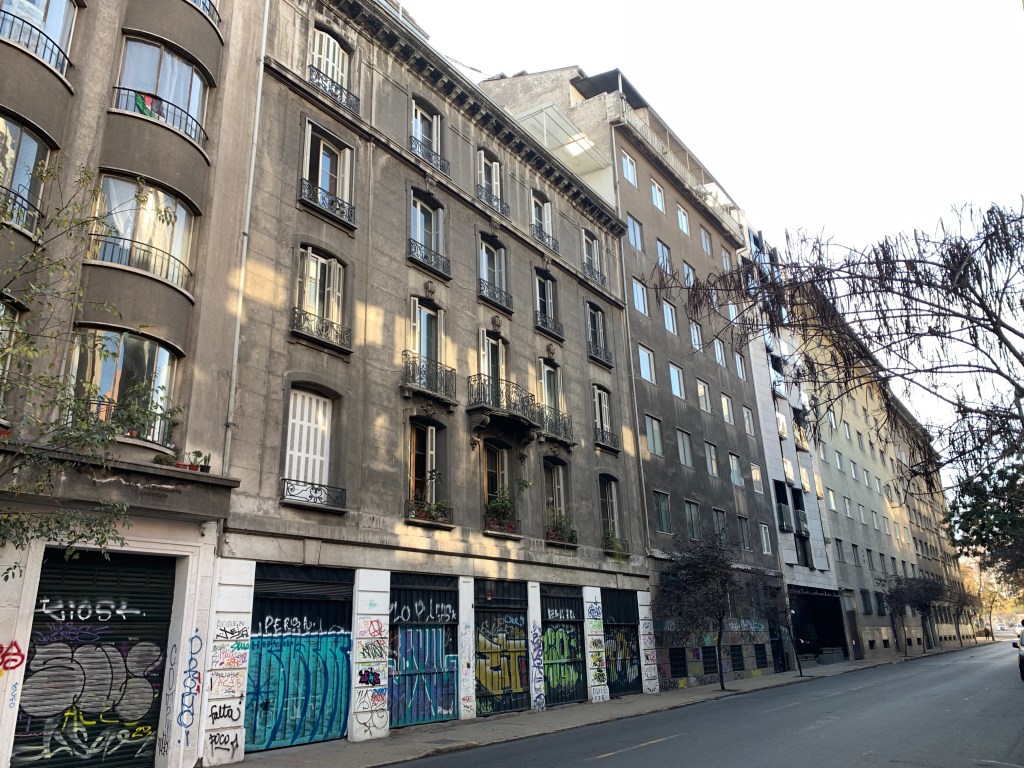
Santiago was a bit of a surprise – Chile is a country with a deserved reputation for being safe to travel in and economically prosperous. However the historic centre of Santiago has taken a hammering due to serious and long running protests in 2019 and continued disquiet about the political direction of the country now. The visible result is that every building’s ground floor is covered in graffiti, heavy duty security barriers are in place and department stores have protected their windows, even during the day. The centre is dirty and grimy and there are a lot of street vendors selling relatively little on the sides of the streets. Some things which are recommended in older tourist guides, are now not safe for tourists and local guides will not take people there – for example the central fish market and its restaurants.
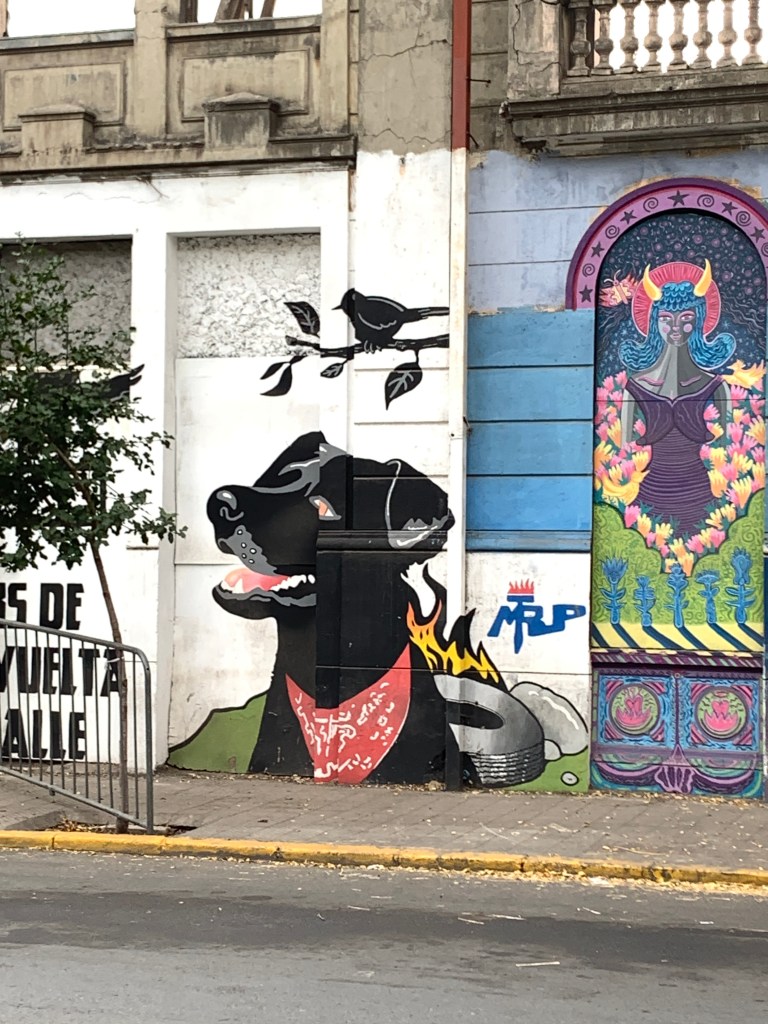
I went on a street art tour – which was fascinating and I saw some beautiful work but this was contrasted by huge amounts of graffiti and also political protest art – for example images of this black dog – whose nickname was Matapacos – which translates as Copkiller. I don’t think the dog actually killed policemen but he regularly took part in street protests in around 2013 and was famous for attacking policeman. The image is popular and frequently used but has also become controversial as crime has increased and police deaths more frequent – 3 policemen were killed in Chile in April in separate incidents – and the control of crime has become a hot political topic.
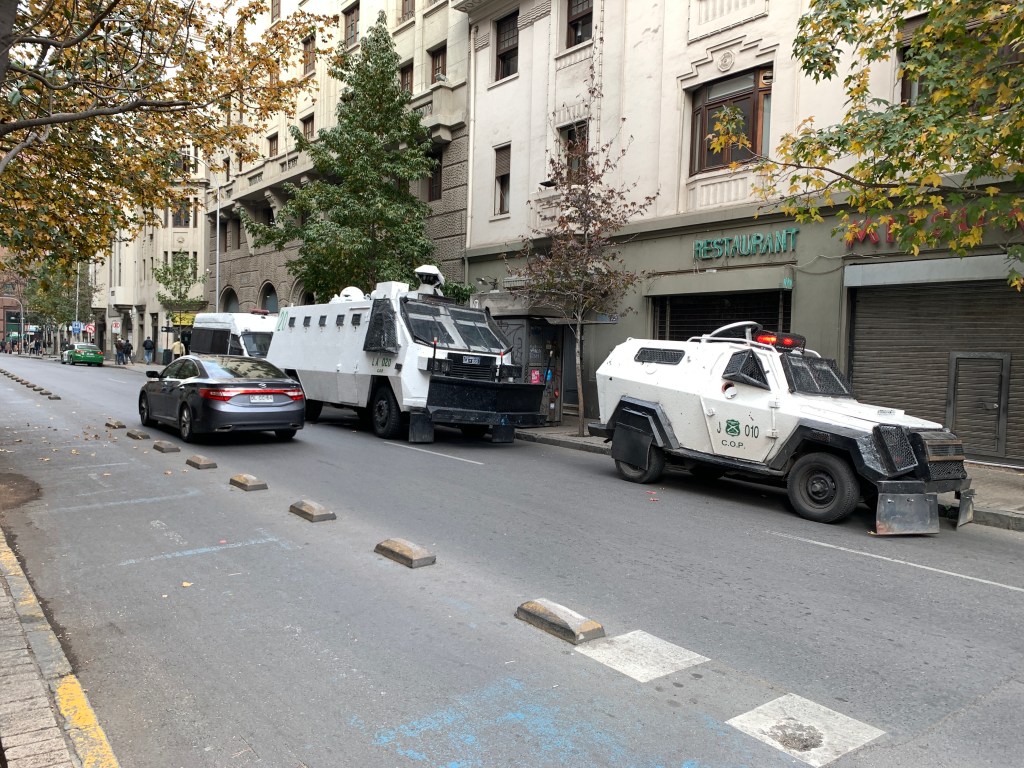
Politics in Chile are also volatile at the moment – the 2019 protests were really only stopped by the start of the pandemic. The unhappiness at the government led to a win for their opposition, a left wing young president. His government are attempting to revise the 1980 constitution (written under Pinochet) but the first attempt was resoundingly rejected in a referendum and the second attempt is being led by the right-wing, which is a concern to many more liberal people. My street art tour guide was concerned that what the majority want is something more in the middle, but that’s not what they’re getting. Concerns over the constitution are also leading to protests, which are being strongly policed.
So this visit to Santiago showed me a city on edge, not really at peace with itself. I did some touristy lovely things such as going up San Cerro Cristobal, visiting the excellent museums and eating in nice restaurants but it’s currently a city where one needs to think carefully about where you are, in a way that I hadn’t expected.
-
The Airbridge Experience
I recently wrote about the perfectly formed and friendly FIGAS, so thinking about flying and having recently flown to the UK and back it must be time to talk about … the Airbridge.
Those of you who live in Cowes on the Isle of Wight (and possibly in other harbours) will know about Floating Bridges, a.ka. ferries that connect the road on either side of some water by boat rather than a physical bridge, so you understand the concept already.
The Airbridge is a plane rather than a bridge, that connects the Falklands with the UK. It flies the route twice a week and takes 18 hours airport to airport or in reality RAF Brize Norton to RAF Mount Pleasant.
It also connects Ascension Island with the UK, Ascension is a midpoint stop on the 16 hour flight. The Airbridge has just started using Ascension again, after several years of having to use Cape Verde and other places, whilst the Ascension runway was made fit for large, heavy planes. A huge engineering and construction project in the middle of the Atlantic.

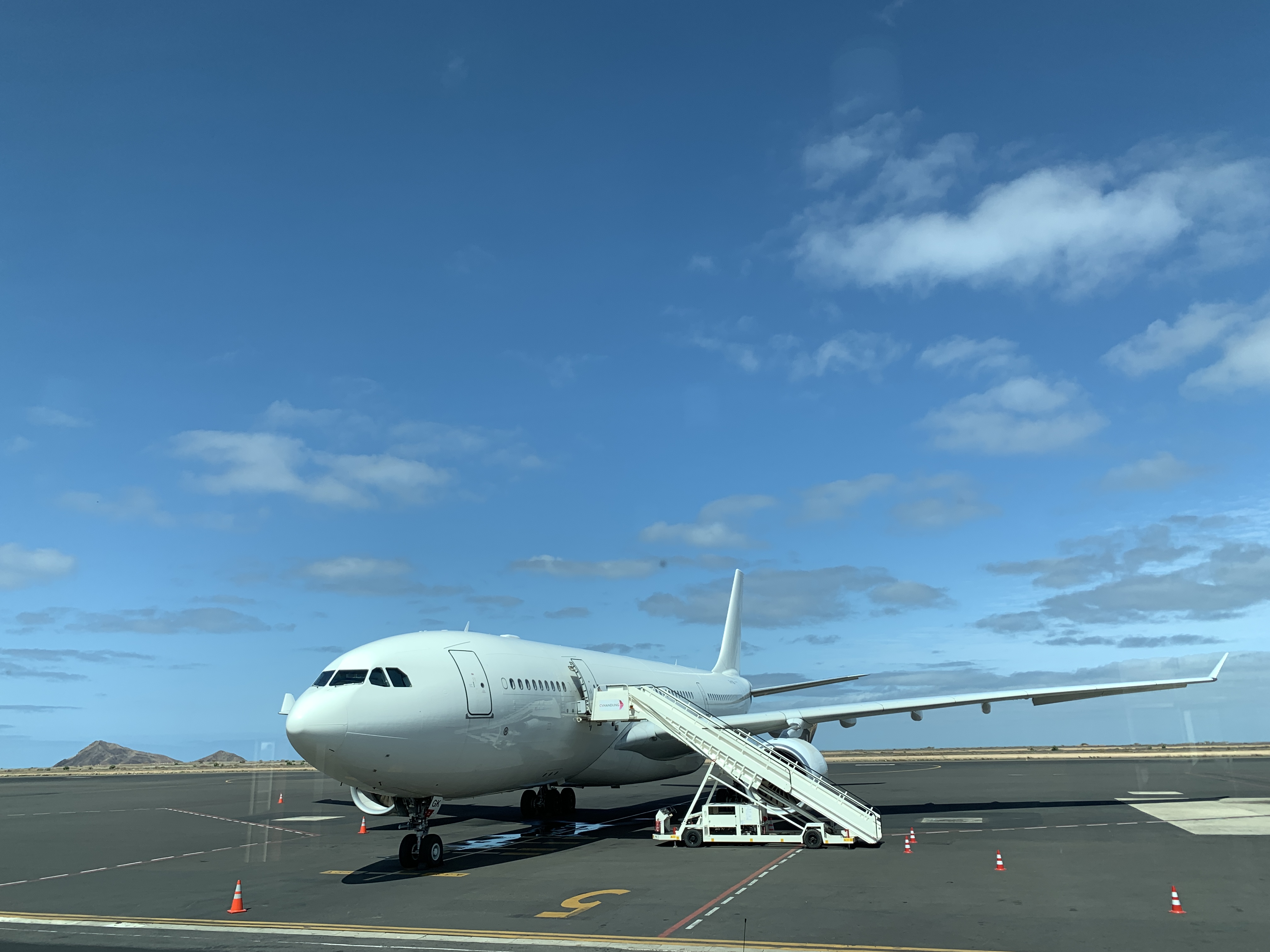
Here is the Airbridge at Cape Verde airport on my most recent trip south – an early morning sojourn in the low 20s and lots of sunshine – a bit different from the conditions at either end.
As you can see the plane looks like a normal commercial flight on the outside and it does on the inside too – no jump seats for us, but normal passenger seats with premium economy legroom and nice cabin crew. The other good news is that the flight is generally not filled to capacity, so you may well have an empty seat next to you, it’s rare to feel like a sardine.
Without doubt all 18 hour flights are boring, no matter who you are flying with. Airtanker (who run the flight) fill in the hours by feeding you – a lot. Not only are there many meals and snacks but I’m coming to the conclusion that the food portions are based on feeding the Infantry and the Marines. For example breakfasts are at least – a cooked breakfast, a large yoghurt, a croissant, fruit and fruit juice and there might be seconds if you want. It makes sense, as I once remember a friend telling me about the British Olympic rowing squad eating all their food and all the spare food on a long haul BA flight and still being hungry. No danger of that on the Airbridge.
So that’s the good news – but there is some bad. Firstly, the Airbridge is not very reliable… about 1 in 5 planes is delayed, often by 24 hours, or diverted, or worst of all cancelled. The major reason for this is weather and particularly wind direction. Apparently the location of RAF Mount Pleasant is not ideal, being near a range of hills. When the north wind blows, it causes an effect called rotor winds, which can do unfortunate things to planes, so on the whole the RAF prefer planes not to land or take off in northerlies. This is complicated by the fact that it’s expensive for the plane to be stuck at Cape Verde overnight or diverted to Montevideo (as happened recently) – although passengers are generally quite happy to be somewhere warm for a day or two. All of these factors lead to a deal of caution and delays when the wind is forecast to be northerly.
The second quirk of flying in and out of RAF airbases is that the military like you to be there early and then they like you to wait. This is particularly true at Brize – the plane’s scheduled takeoff is around 1am and check in opens at 7pm and closes at 10pm. There are dire warnings about making sure you have left enough time to check in – so most people get there between 8 and 9pm. As it’s an RAF base, not Heathrow, there are a minimal number of things to do once you’ve checked in – the military passengers set the gold standard in waiting. They have generally brought cards to play in groups and if it’s a particularly long wait will stretch out on the floor (sometimes in a sleeping bag brought for the purpose) and go to sleep. I’m perfecting my going to sleep sitting up skills – I haven’t tried the floor yet but I can see the appeal!
However, despite its quirks the Airbridge is a vital link for the Islands and once you’re aboard it’s a pretty good service. It makes a good story and once you’ve got where you want to go, it’s all worthwhile!
-
Where is Sarah?

Apologies for the radio silence – in April I was in the UK for 3 weeks, going to meet various education partners, particularly those schools and colleges that Falkland Islanders go to if they continue their education at 16.
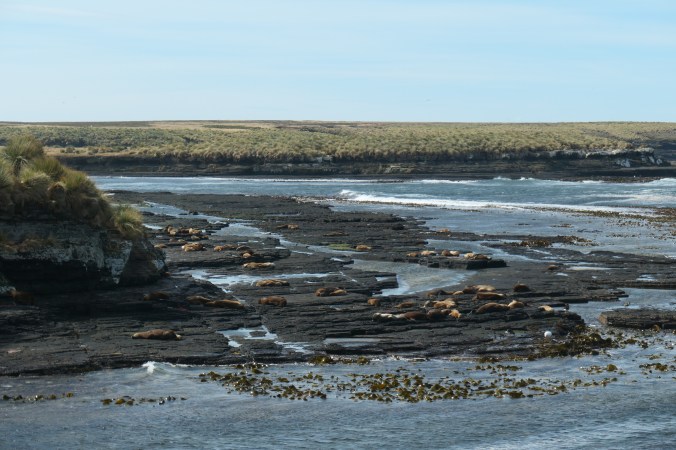
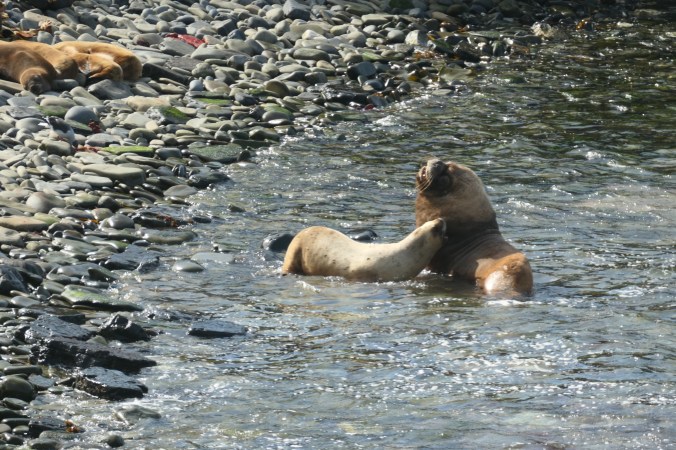
I’ve been back a couple of weeks and just feel like I’m catching up with myself. So to keep you going, whilst I get my blogging mojo back, here are some wildlife photos from a March weekend visit to Bleaker Island
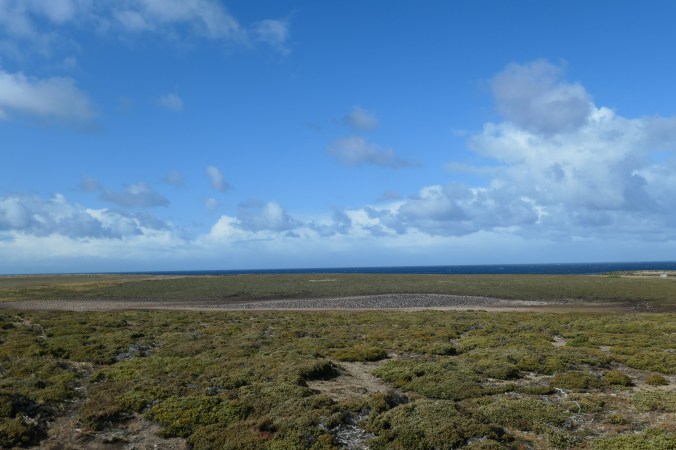
A very large imperial cormorant colony (it’s the bit that looks like an eye!) 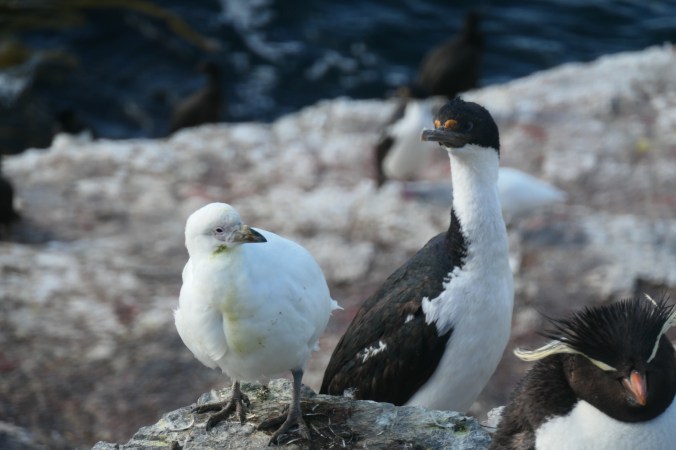
A sheathbill examining an Imperial cormorant 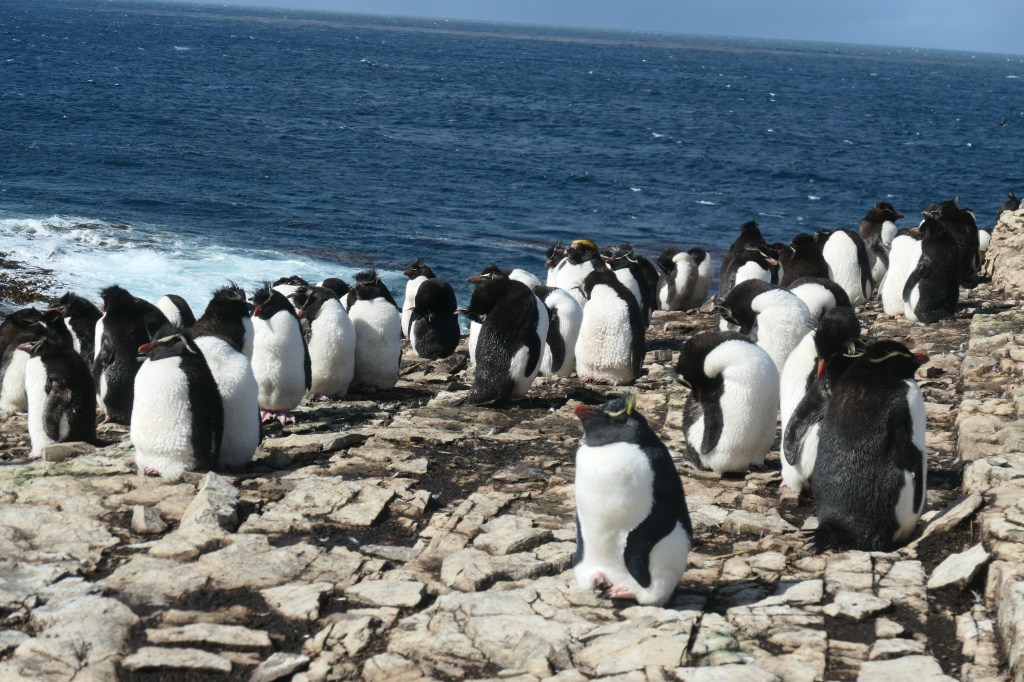
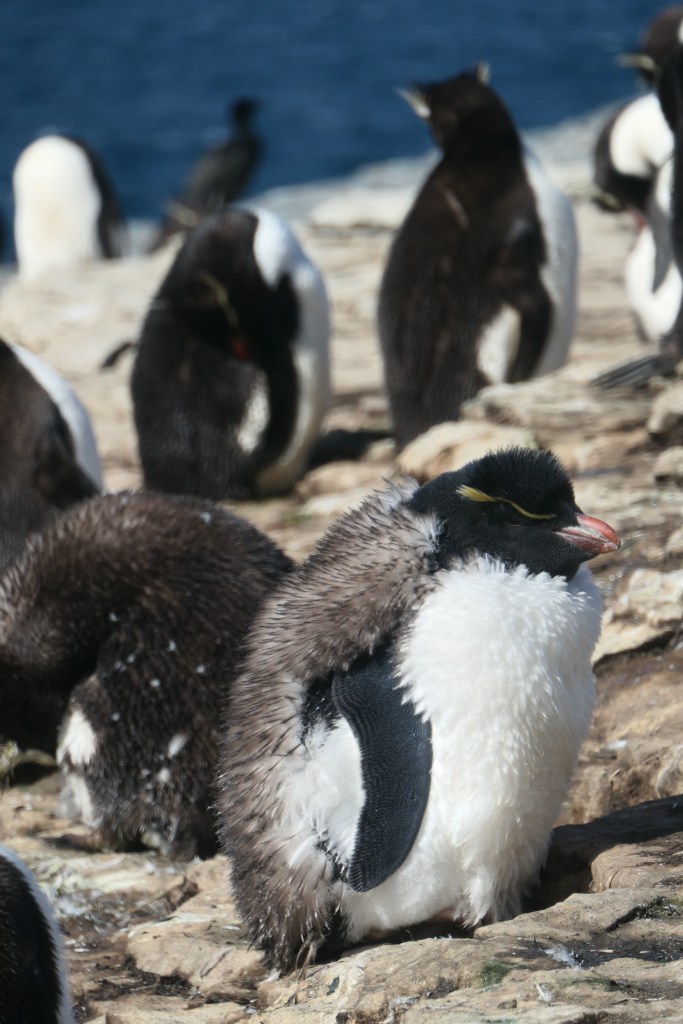
Moulting Rockhoppers 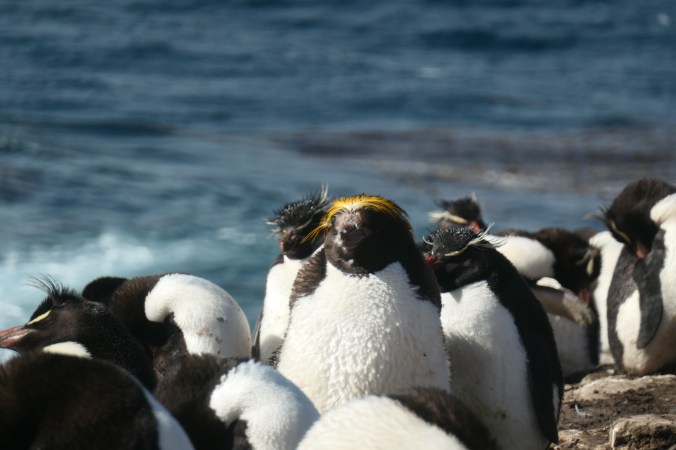
The Macaroni Penguin aka Donald Trump
-
Subscribe
Subscribed
Already have a WordPress.com account? Log in now.
 Where is Sarah?